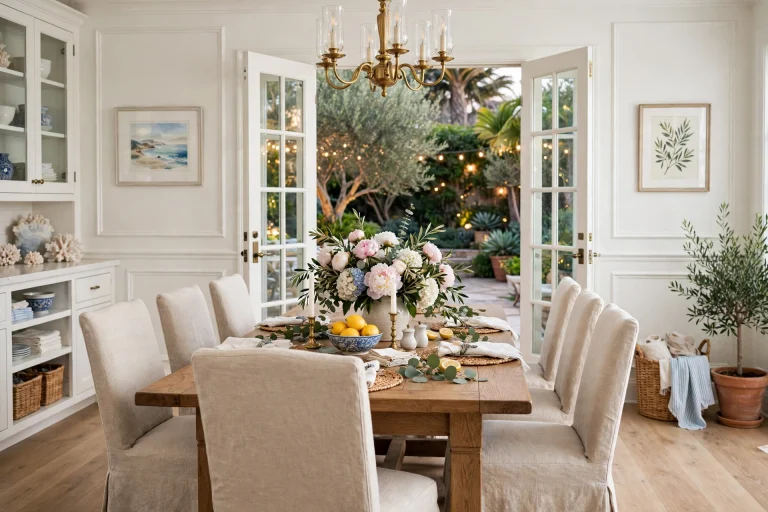
12 Corner Dining Nook Ideas That Elevate Modern Dining Nook Designs
The most loved seat in a modern home is rarely at the head of a formal dining table. It is tucked into a corner — curved around a round table, softened with cushions, lit by a low pendant, and close enough to the kitchen for a second coffee. This guide shows twelve ways to turn an overlooked corner into that seat.
Why corners work
A corner gives you two walls to lean on. Seating fixed against them frees the centre of the room, seats more people per square metre than freestanding chairs, and creates the enclosed, unhurried feeling people associate with a favourite cafe booth.
How to use this guide: Each idea includes why it works, how to get the look, and who it suits best. Start with the idea that matches your corner — window, alcove, or plain blank walls — then use the planning checklist at the end to size it correctly.
1. The Built-In Banquette
The blueprint for the modern nook. An L-shaped bench built against both walls turns dead corner space into seating for five or six where two chairs would have squeezed in. Add a hinged seat or drawers underneath and the bench doubles as storage for table linen, board games, and seasonal serving dishes.
How to get it: Build the base to a seat height of 45-48 cm, add a 10 cm foam cushion, and angle the back slightly or add loose back cushions. Paint the base to match your cabinetry so the nook reads as architecture, not furniture.
Best for: Families and everyday dining. Watch out: Fixed seating needs a pedestal table — four legs will block people sliding in.
2. The Curved Booth
A gentle curve does what a sharp corner cannot: it softens the room, removes the awkward end seat, and lets people slide in and out without shuffling. Curved banquettes feel generous and a little luxurious — the reason restaurants use them for their best tables.
How to get it: Use a curved or softly angled banquette with a round or oval table centred on the curve. Channel stitching or vertical fluting on the back follows the curve beautifully and hides seams. Keep the radius generous; a tight curve pinches knees.
Best for: Open-plan rooms and corners on a walkway. Watch out: Curved upholstery costs more — save by curving only the back, not the base.
3. The Window-Wrapped Nook
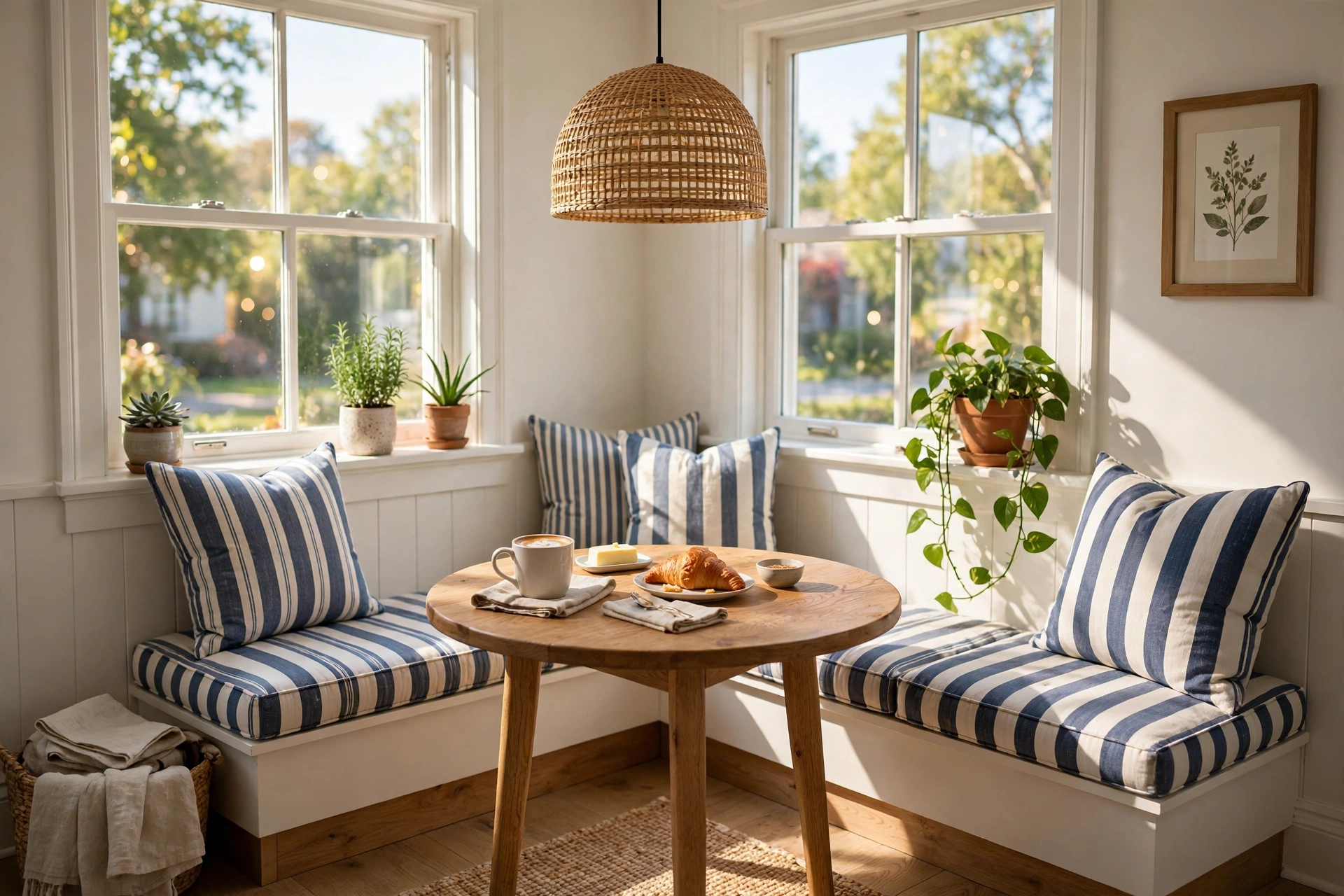
Wrap the banquette around windows on two sides and the view becomes the decoration. Morning light makes breakfast feel like an occasion, plants thrive on the sill, and no artwork is needed. This is the nook people choose for slow weekends, even in homes with a larger dining room elsewhere.
How to get it: Keep the bench back below sill height, choose fade-resistant fabrics, and add a simple blind for glare and evening privacy. A woven or timber pendant echoes the natural light without competing with it.
Best for: Bay windows and garden-facing corners. Watch out: South- and west-facing glass gets hot — ventilation and a blind are essential.
4. The Round-Table Reset
Swapping a rectangular table for a round pedestal table is the single easiest upgrade to an existing corner. There are no corners to catch hips, no legs to block the slide-in, and everyone faces each other. A 100-120 cm round comfortably seats five around a banquette.
How to get it: Centre the table on the corner, not against the wall, and leave about 60 cm per person around the edge. Timber softens an upholstered bench; white or stone tops brighten a shaded corner.
Best for: Small footprints and renters (no building work). Watch out: Very large rounds wobble on a single pedestal — choose a wide, weighted base.
5. The Scandinavian Light Corner
Pale oak, warm white walls, linen cushions, and uncluttered surfaces make the smallest corner feel larger and calmer. Scandinavian nooks rely on texture rather than colour — grain in the timber, weave in the throw, a single plant — so they pair easily with the rest of an open-plan room.
How to get it: Limit the palette to white, pale wood, and one soft neutral. Choose simple spindle or wishbone-style chairs on the open side, and keep the table setting minimal: ceramics, glass, and greenery.
Best for: North-facing and compact corners. Watch out: All-pale can feel cold — add warmth with timber, wool, and warm-white lighting.
6. The Bold Colour Block
Paint the walls, bench base, and window trim in one saturated colour — deep green, inky blue, or warm terracotta — and a leftover corner becomes a destination. Colour-blocking works especially well in small nooks because the strong boundary makes the space feel designed, not leftover.
How to get it: Commit to one colour in a matte finish, then contrast it with a light table and one warm accent in cushions or chairs. Test the colour at breakfast and at night; saturated shades shift dramatically with light.
Best for: Plain new-build corners with no architectural features. Watch out: Gloss finishes show every mark — choose washable matte or eggshell.
7. The Arched Nook
An arch turns a corner into a room within a room. Whether it is a true alcove, an arched opening, or simply an arch painted or panelled onto the wall above a banquette, the curve frames the table, focuses attention, and makes even a tiny setting feel considered and intimate.
How to get it: The budget version is paint: mask a large arch on the wall behind the bench and paint it a tone deeper than the surrounding wall. The full version adds shelving inside the arch for pottery, books, and a small lamp.
Best for: Featureless walls and Mediterranean or modern-country schemes. Watch out: Centre the table on the arch — off-centre arches look like a mistake.
8. The Leather and Timber Bistro
Cognac or chocolate leather, a solid timber table, and black metal details recreate the corner booth of a Paris bistro — and improve with age. Leather wipes clean, shrugs off coffee and red wine, and develops a patina that fabric never will, making this the most forgiving choice for daily use.
How to get it: Choose faux leather if budget or ethics require it — modern versions are convincing and even easier to clean. Pair it with a marble-effect or timber top and a simple globe or enamel pendant.
Best for: Busy households and cafe lovers. Watch out: Dark leather in a dark corner needs a light wall or table to lift it.
9. The Floating Bench + Chairs Mix
Fix a floating bench along one wall — with no base touching the floor, the room feels lighter and cleaning is effortless — then put proper chairs on the open side. Guests get a chair with a back, children get the bench, and the whole arrangement can expand for a bigger gathering.
How to get it: Wall-mount a timber bench with hidden steel brackets rated for the load, or choose a legged bench for a renter-friendly version. Echo the bench timber in a shelf or the table edge to tie the mix together.
Best for: Households that entertain and multi-use rooms. Watch out: Floating benches need a solid wall — check the structure before you drill.
10. The Patterned Tile and Textile Layer
Pattern is the no-rebuild refresh. A patterned tile splashback or floor, gingham and floral cushions, a striped throw, and a woven rug give a plain white nook instant personality — and every element can be swapped seasonally. Mixing patterns works when they share a colour family.
How to get it: Pick one hero pattern, one smaller-scale pattern, and one plain in the same palette. Keep the big surfaces — walls, bench, table — plain so the patterns have somewhere quiet to sit.
Best for: Renters and anyone who redecorates often. Watch out: Cushions near a hob or sink need washable, removable covers.
11. The Pendant-Lit Focal Point
A low pendant centred over the table is the nook’s full stop. It pools warm light where people gather, leaves the edges in softer shadow, and — in an open-plan room — announces that this corner is its own place. Two smaller pendants work over a longer rectangular table.
How to get it: Hang the shade about 75-80 cm above the tabletop, centred on the table rather than the room. Choose a warm bulb (2700K) on a dimmer, and add a small wall light or candle for the layered glow restaurants rely on.
Best for: Open-plan spaces and evening entertainers. Watch out: Centre the pendant before the table is fixed — moving electrics later is costly.
12. The Work-From-Home Double-Duty Nook
Planned well, the nook is a desk by day and a dining table by night. A banquette is more comfortable for a morning of laptop work than a kitchen stool, daylight from the corner window beats a spare-room desk, and built-in storage swallows chargers and notebooks at dinner time.
How to get it: Add a socket with USB charging inside or beside the bench, choose a table height of about 75 cm (right for both dining and typing), and keep one storage drawer dedicated to work kit so clearing for dinner takes a minute.
Best for: Flats and homes without a spare room. Watch out: Cushions that are too soft slump by midday — choose firmer foam for a working seat.
Planning Guide — Size it right: the numbers behind every good nook
Style draws the eye, but measurements decide whether people linger or perch. These standard clearances are the difference between a nook that photographs well and one that gets used three times a day.
Seat height 45-48 cm — feet rest flat; knees clear the table apron. Seat depth 40-45 cm — deeper seats need back cushions to stay comfortable. Table height 73-76 cm — works for both dining and laptop use. Space per person about 60 cm of table edge — elbow room for a full place setting. Table overhang: bench edge to table edge, overlap by 5-10 cm — plates sit close; no reaching across a gap. Pull-out space 90 cm behind chairs where possible — people can pass behind a seated diner. Pendant height 75-80 cm above the tabletop — light pools on the table without blocking faces.
Your corner checklist: Measure the corner first — both wall lengths, window sill heights, sockets, and radiators. Choose the table shape before the bench — round for tight corners, rectangular for long ones. Use a pedestal or wall-mounted table wherever a bench is fixed, so people can slide in. Pick fabrics for real life — washable covers, performance weaves, or leather where food lands daily. Build storage into the bench — a lift-up seat is the cheapest cupboard you will ever add. Light it on purpose — one centred pendant, warm bulbs, and a dimmer if you can. Test with cardboard — tape the table footprint on the floor and live with it for a day before ordering.
Start with how you linger. If mornings are coffee and a laptop, prioritise daylight, power, and a firm seat. If evenings are long dinners, prioritise back support, warm light, and room for six. The right idea from this list is the one that matches the hours you will actually spend there — build that one properly, and the corner will take care of the rest.