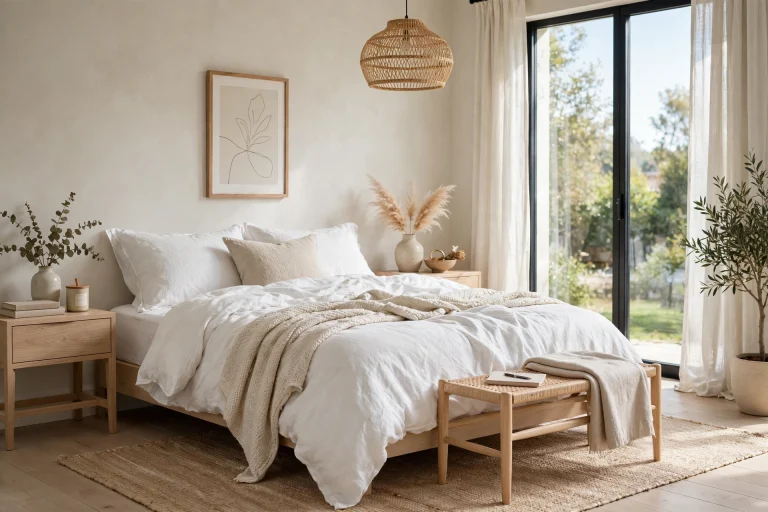
20 Cozy Bedroom Ideas for a Warm and Inviting Home
A cozy bedroom is not bought in one trip. It is built, layer by layer, from things you can touch: warm light, soft bedding, wood that has some grain in it, a rug your feet actually land on in the morning, and one clear colour that holds the room together. That is what this guide does. Twenty ideas, each one you can try on its own, in a real bedroom — small or large, rented or owned. No idea here needs a full renovation, and no idea needs everything new. Start with the one that matches the room you already have, spend in the right order, and let the rest follow. Every idea names its colour palette, its textures, and a budget-friendly first step, because a warm room is a practical room: it should help you sleep better tonight, not just photograph well.
1. Layer White Bedding Like a Hotel Bed
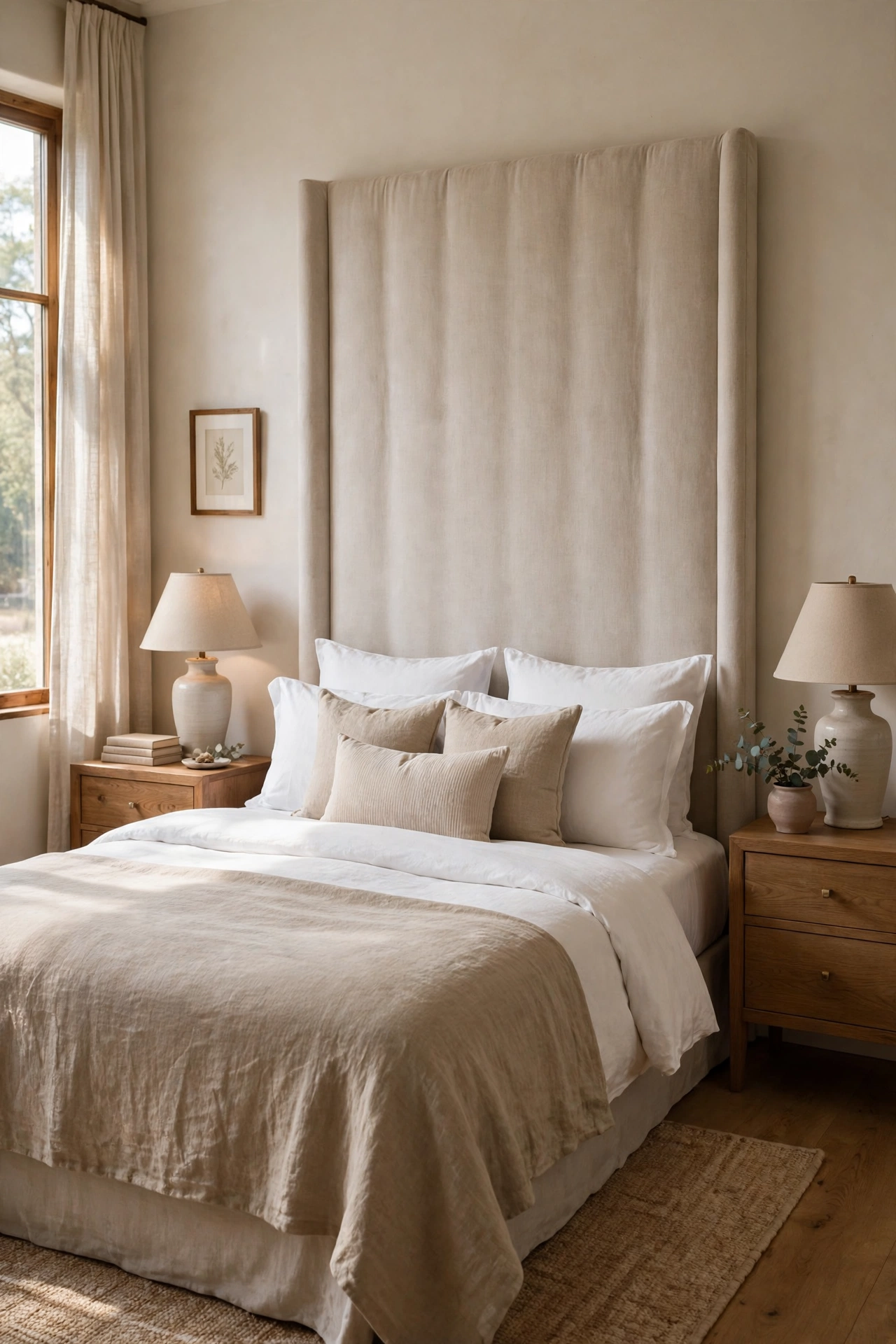
Start with the bed, because it is the largest surface in the room. A white or ivory fitted sheet, a duvet folded back a third of the way down, a light coverlet across the foot, and two sleeping pillows with two larger squares behind them. Symmetry does the work here: matching nightstands and lamps on both sides make even an ordinary bed read as calm and finished. Palette: white, ivory, warm grey. Textures: cotton percale, a washed-linen throw, one wool cushion. Budget first step: buy the best white bedding set you can afford and a throw for the foot of the bed. Skip a new headboard for now.
2. Add a Tall Upholstered Headboard
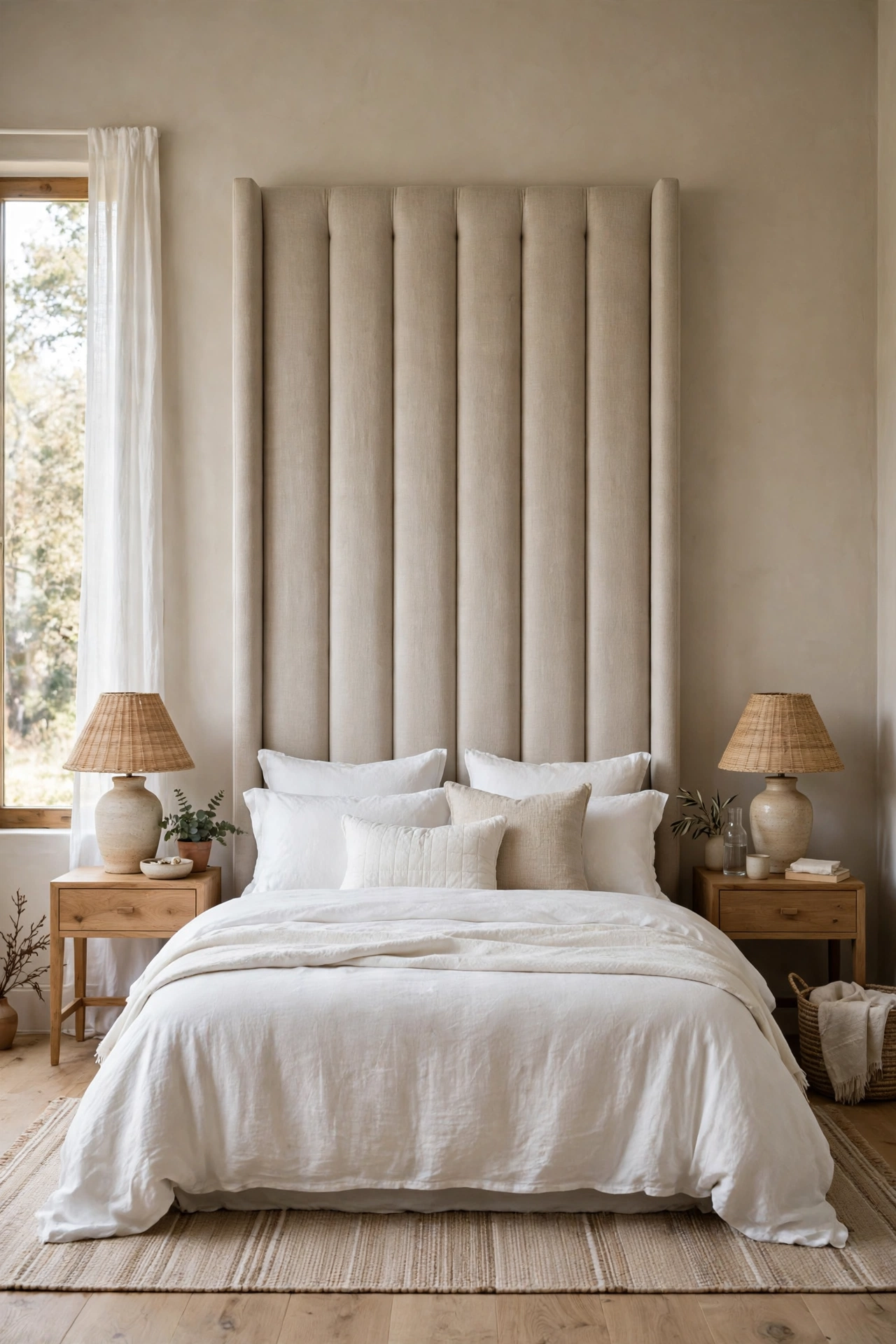
A tall headboard is the cheapest backdrop a bedroom can have. It frames the pillows, hides a plain wall, and makes the bed the obvious centre of the room. Choose one wider than your pillows, in linen, velvet or a soft boucle, in a warm neutral — oatmeal, stone, mushroom or sage. Palette: oatmeal, stone, warm white. Textures: linen or velvet, wood, brass. Budget first step: a simple upholstered headboard in a neutral fabric, fitted properly to the bed frame so it does not wobble.
3. Warm the Walls with a Soft, Muted Colour
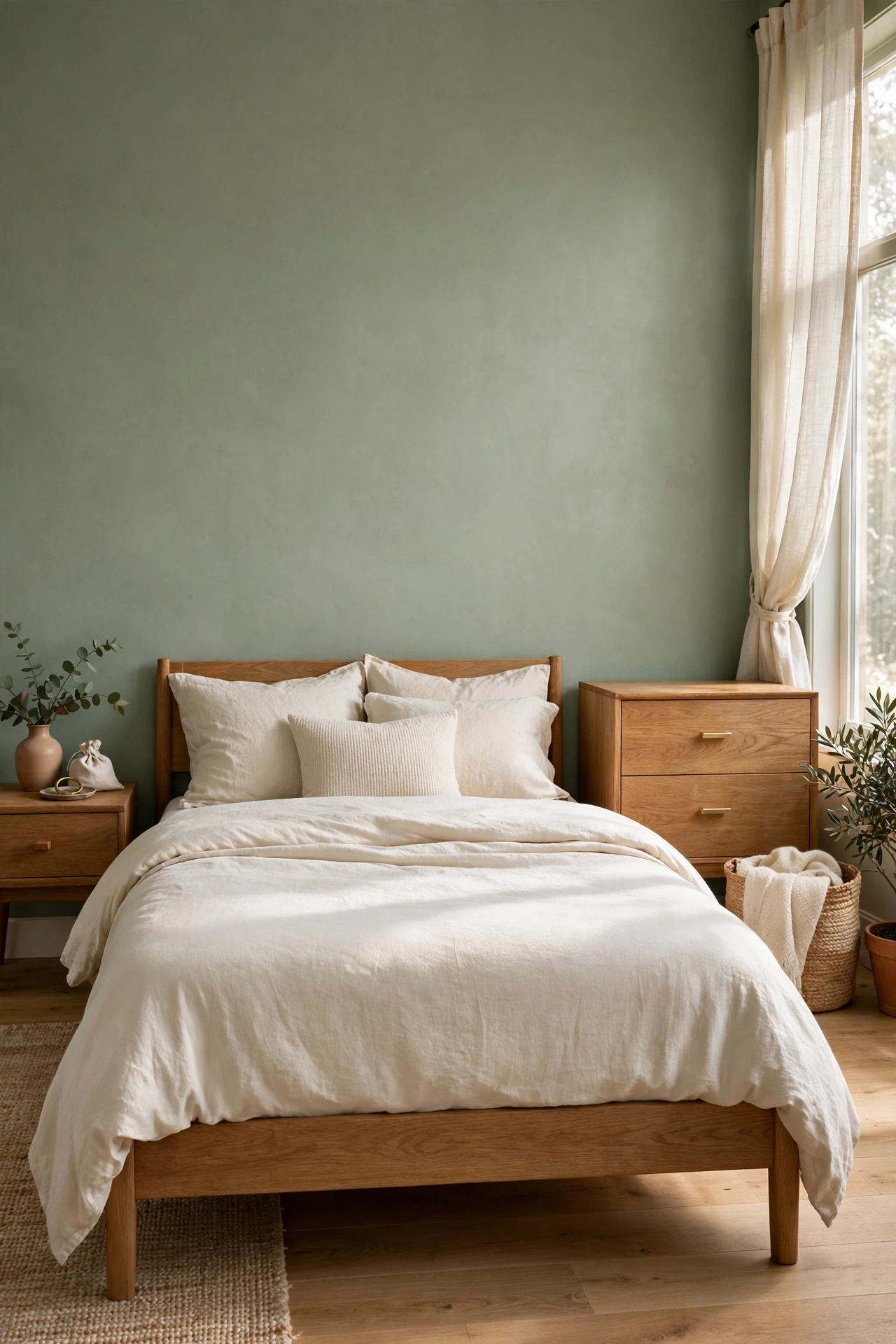
White walls can feel cold at night. A muted colour — sage, warm clay, dusty blue, soft terracotta or a pale mushroom — wraps the room without darkening it. Paint all four walls the same colour, including the skirting, for a cocooning effect, or paint just the wall behind the bed if you are renting or testing the shade. Palette: sage + cream, clay + white, dusty blue + oak. Textures: matte paint, linen, wood. Budget first step: paint one wall and live with it for a week before committing to the whole room.
4. Put Warm Light at Bedside Height
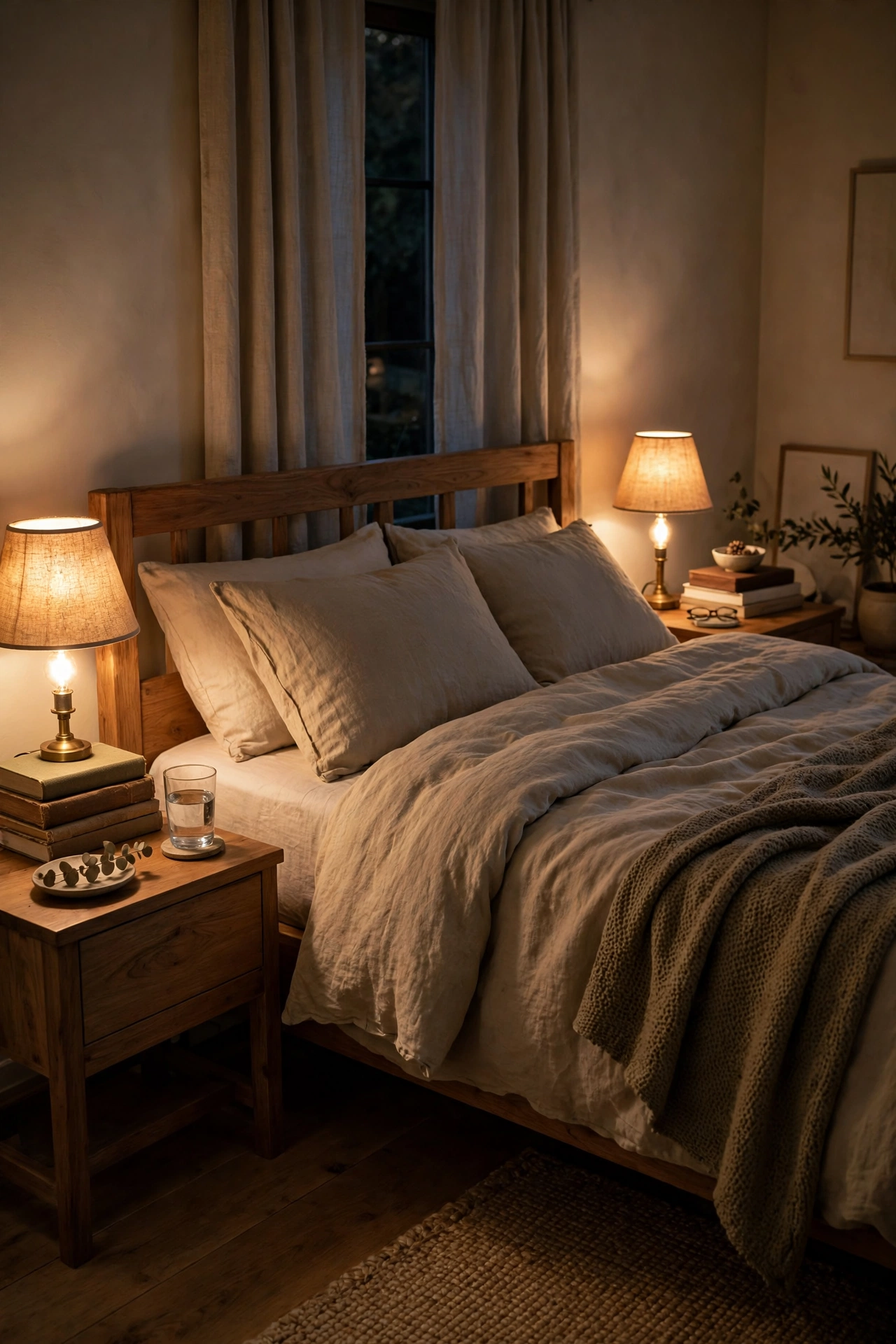
One bright ceiling light is the fastest way to kill a cozy bedroom. Two bedside lamps, on dimmers if you can, at about eye level when you are sitting up in bed, change the room more than any furniture swap. Warm bulbs around 2700K keep the light golden in the evening. Palette: warm white light, brass or black metal, linen shades. Textures: ceramic, linen, wood. Budget first step: swap bright white bulbs for warm ones and add a second low lamp.
5. Lay a Rug Your Feet Land On
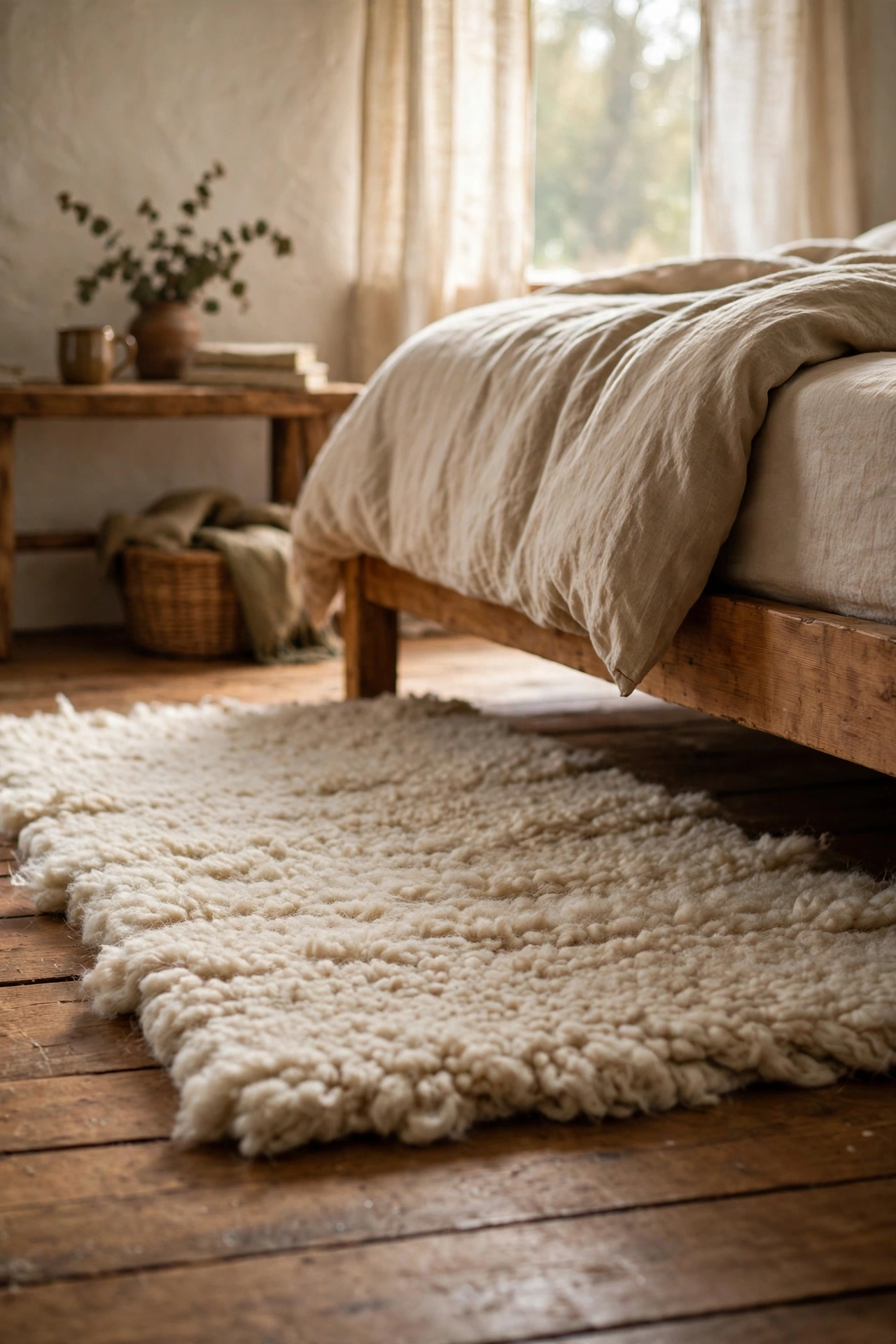
A rug should extend at least 45–60 cm beyond the bed on the sides you get out of, so your feet never meet cold floor first thing. Wool, jute or a soft cotton flatweave all work — wool for warmth, jute for texture, cotton for easy washing. Palette: natural wool, jute, oatmeal. Textures: wool pile, woven jute, wood floor. Budget first step: a washable runner on each side of the bed if a full rug is too much right now.
6. Mix Linen, Wool and Cotton — Never Just One Fabric
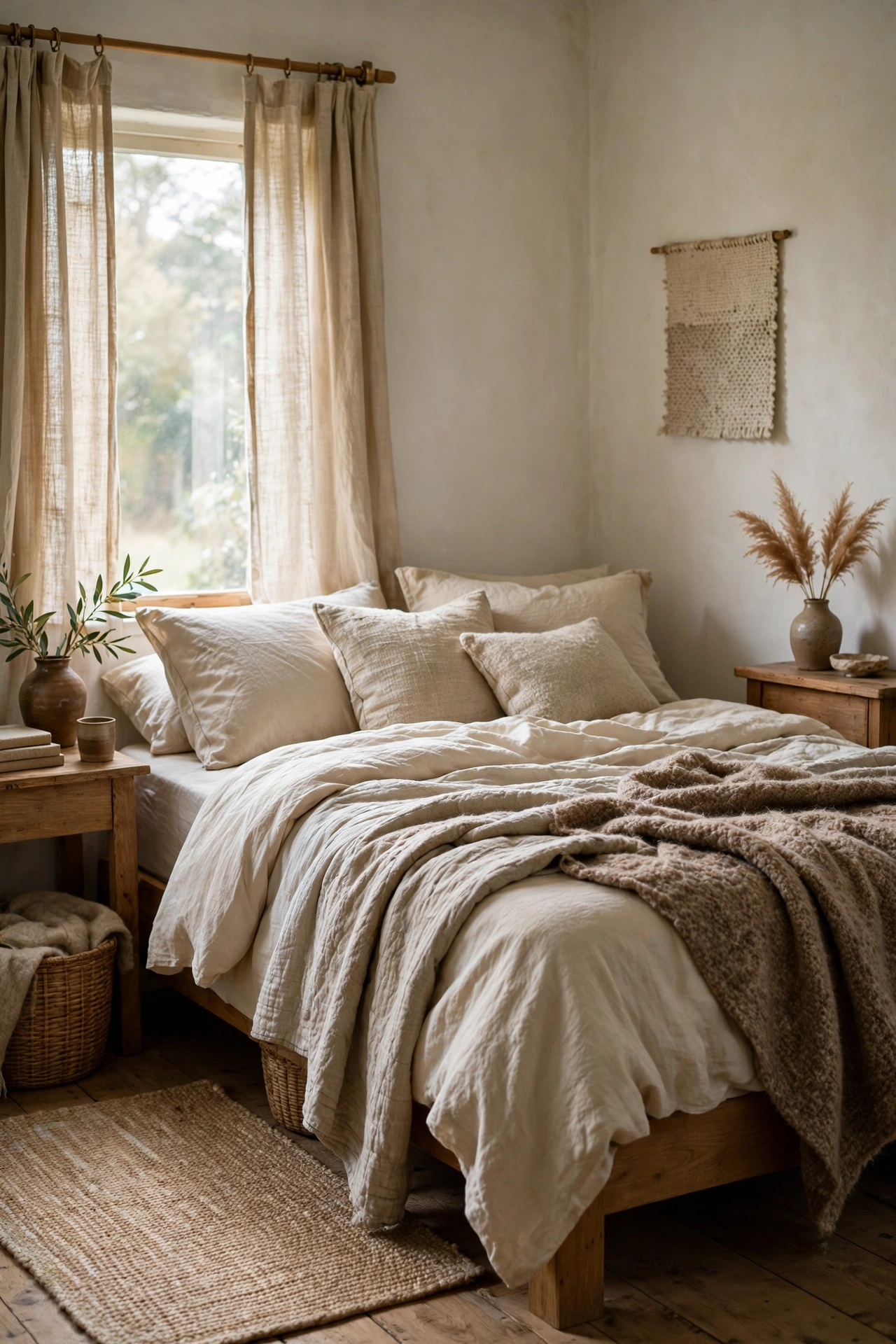
Cozy is a texture problem, not a colour problem. One fabric alone reads flat. Linen curtains that move, a cotton coverlet, a wool throw and one velvet or knitted cushion give the eye — and the hand — somewhere to go. Keep the palette tight so the mix does not turn busy. Palette: natural linen, cream cotton, oatmeal wool. Textures: linen, wool, cotton, one velvet accent. Budget first step: a linen throw and one textured cushion on the bed you already have.
7. Choose a Low Wooden Bed Frame
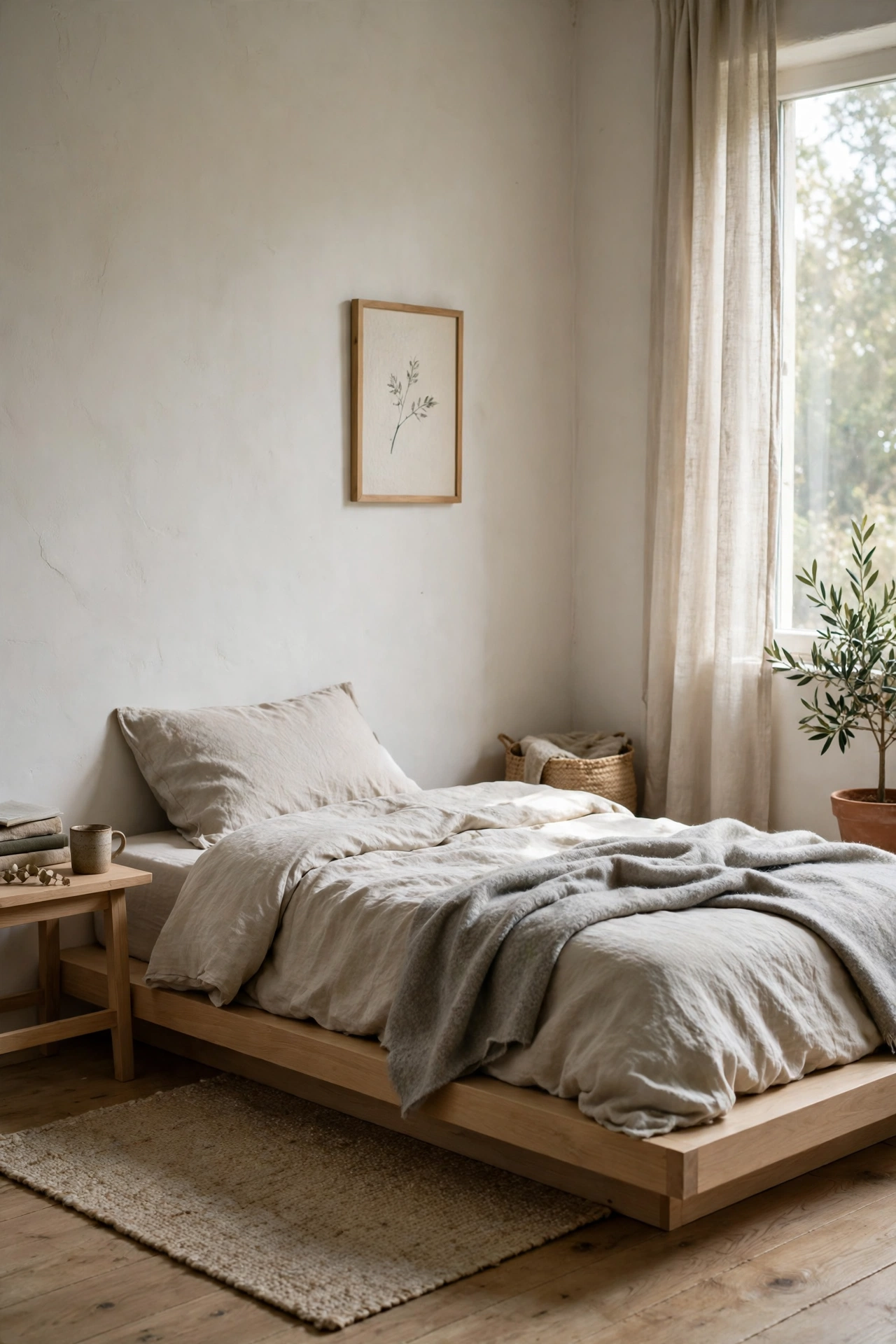
A low platform bed in light oak, ash or warm walnut makes a room feel grounded and calm, and it leaves wall space free above the bed for art or a shelf. Keep the wood tone consistent across the bed, nightstands and dresser if you can — mixed woods work, but one dominant tone holds the room together. Palette: pale oak, warm white, stone. Textures: wood grain, linen, rattan. Budget first step: a simple low wooden frame, second-hand if you can find a solid one.
8. Hang Sheer Linen Curtains High and Wide
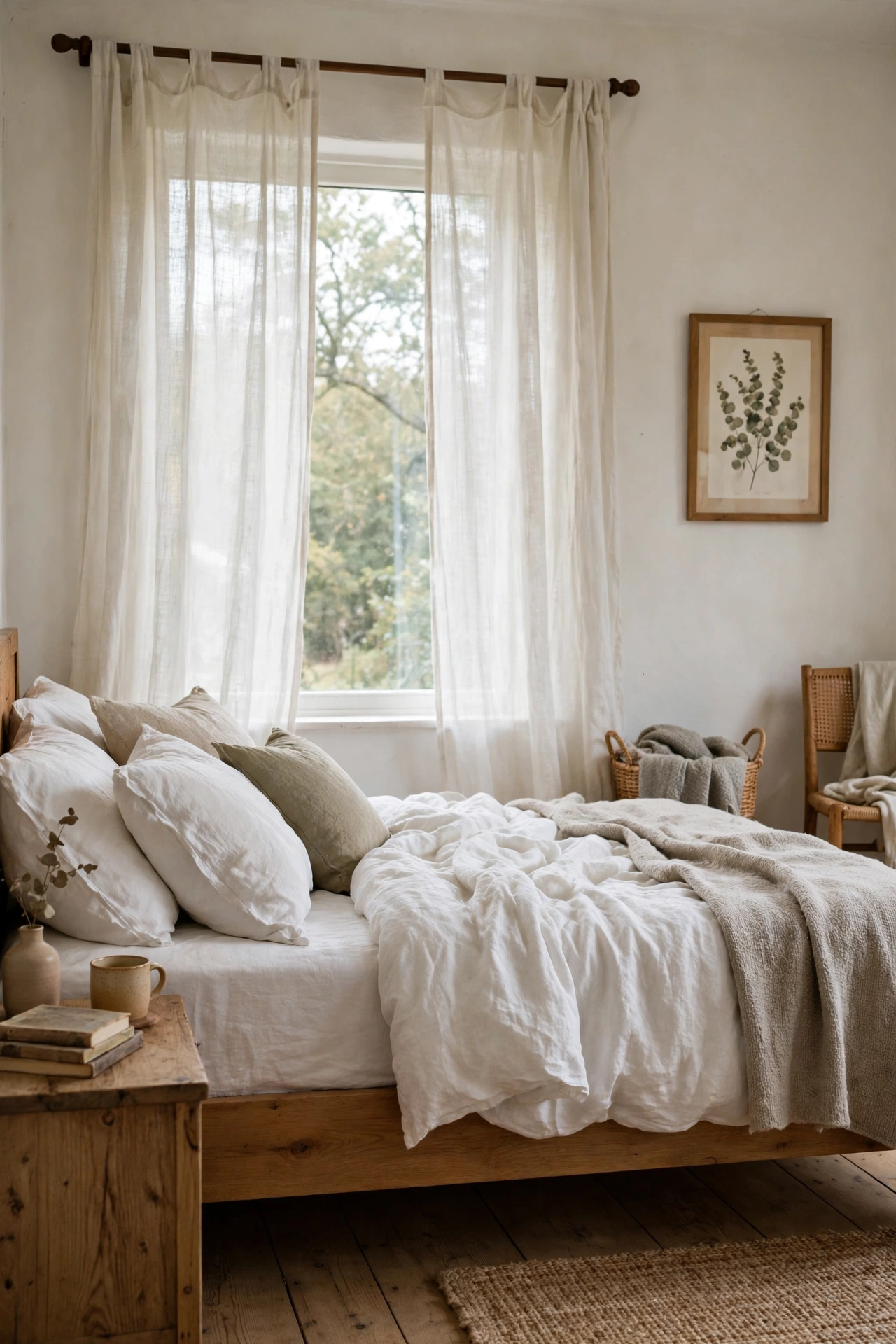
Curtains hung from ceiling height, wider than the window, in sheer or light linen, make a bedroom feel taller and softer, and they let daylight in during the day. Add a simple blackout blind behind them for sleep, rather than heavy drapes that block the light completely. Palette: white linen, warm wood, stone. Textures: sheer linen, wood, cotton. Budget first step: one pair of sheer linen curtains, hung high, with a blackout blind behind.
9. Create a Reading Corner with One Good Chair
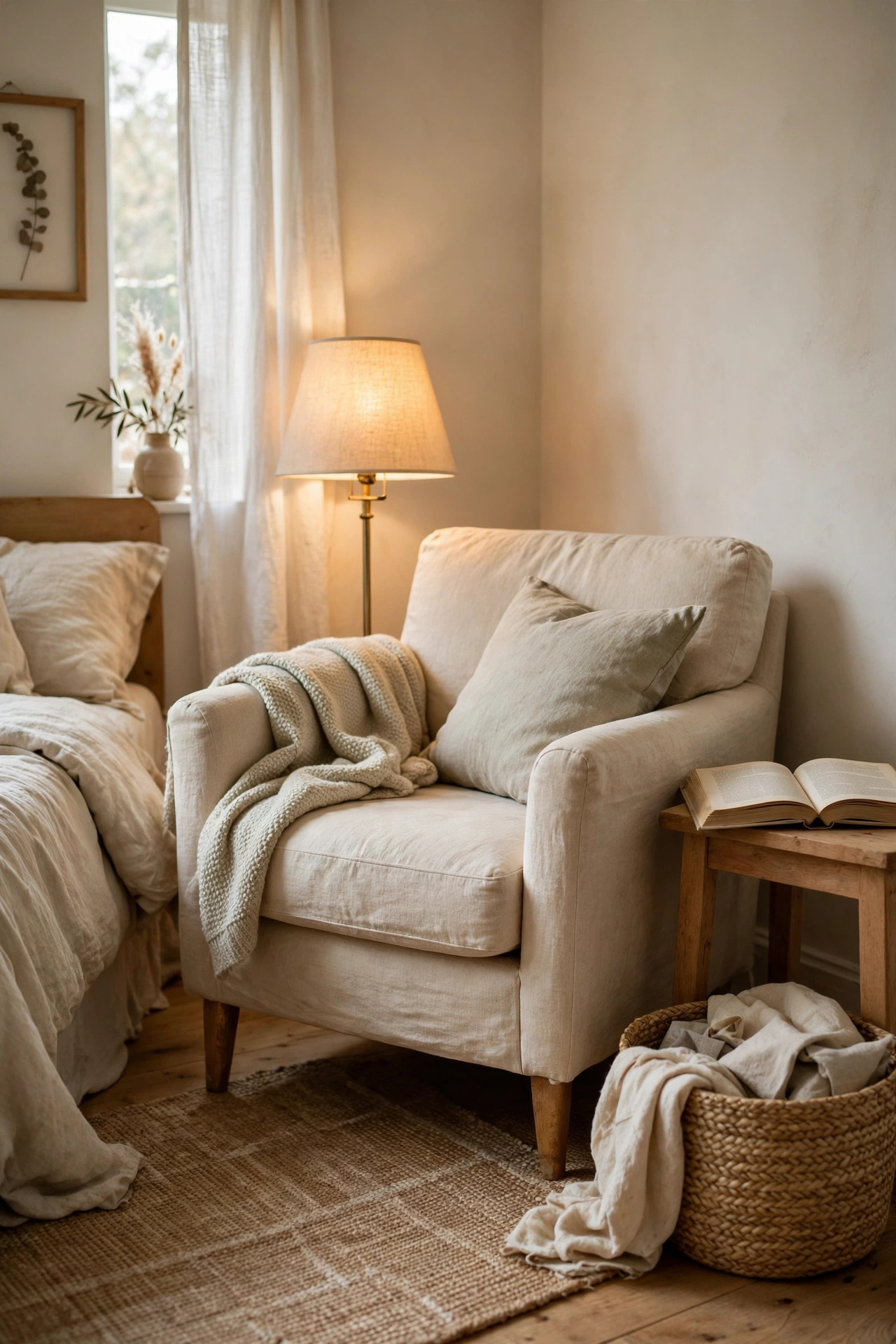
A small armchair, a floor lamp and a small side table in a corner turn a bedroom from a place you only sleep in into a room you use in the evening. It does not need to be large — a compact chair in a warm fabric, a woven basket beside it for a book and a throw, is enough. Palette: warm neutral chair, wood table, brass lamp. Textures: woven, wool, wood. Budget first step: a second-hand armchair with a washable throw, plus a lamp you already own.
10. Add Plants That Suit Your Light
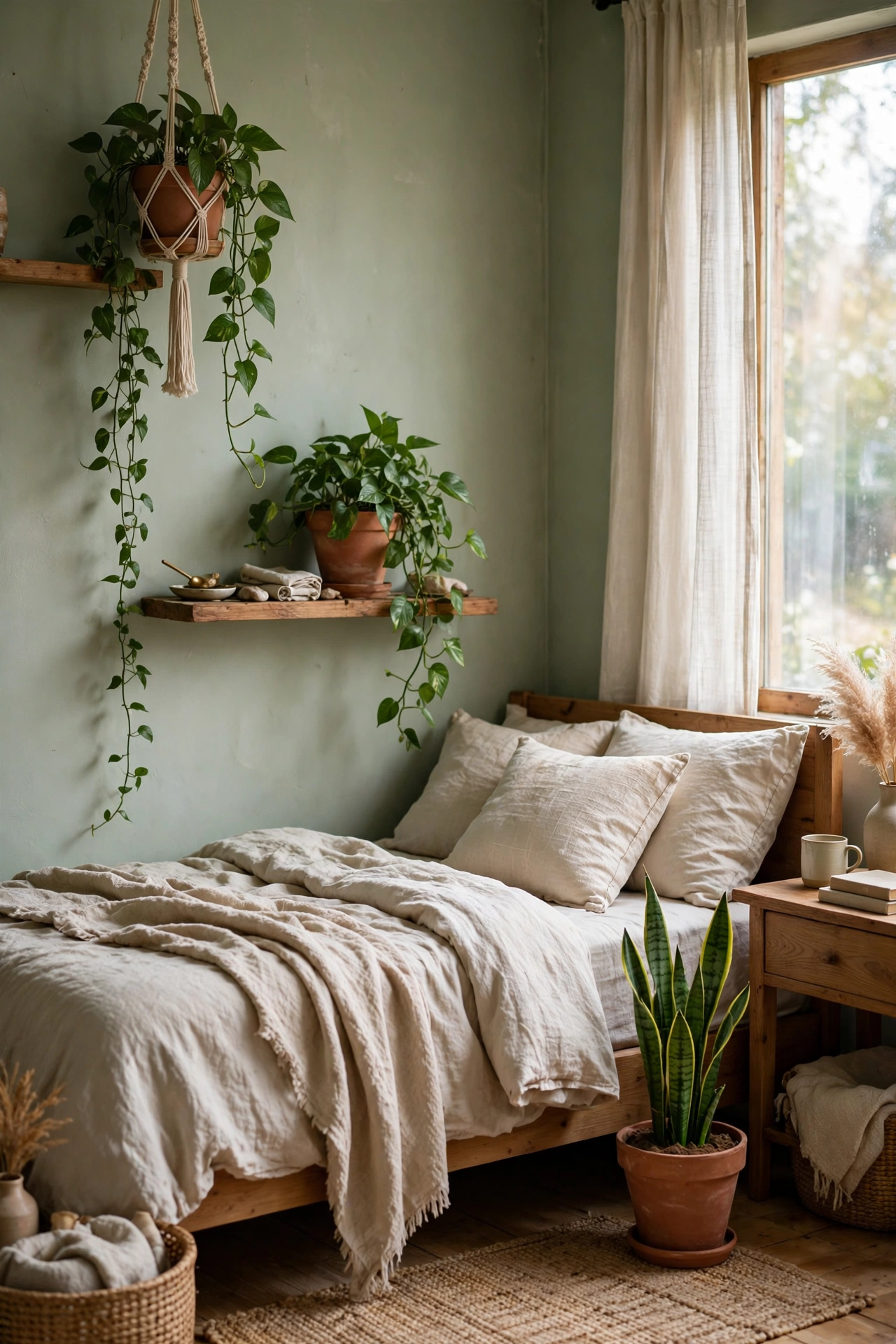
Plants make a bedroom feel alive, but only if they suit the light you actually have. Pothos and snake plants cope with low light; a monstera or fiddle-leaf fig needs a bright window. Group plants at three heights — hanging, on furniture and on the floor — and repeat natural materials in the rug and baskets. Palette: sage green, terracotta, natural wood. Textures: leaves, terracotta, woven baskets. Budget first step: three easy plants at three heights, in pots you already own.
11. Use Warm Wood on the Floor and Furniture
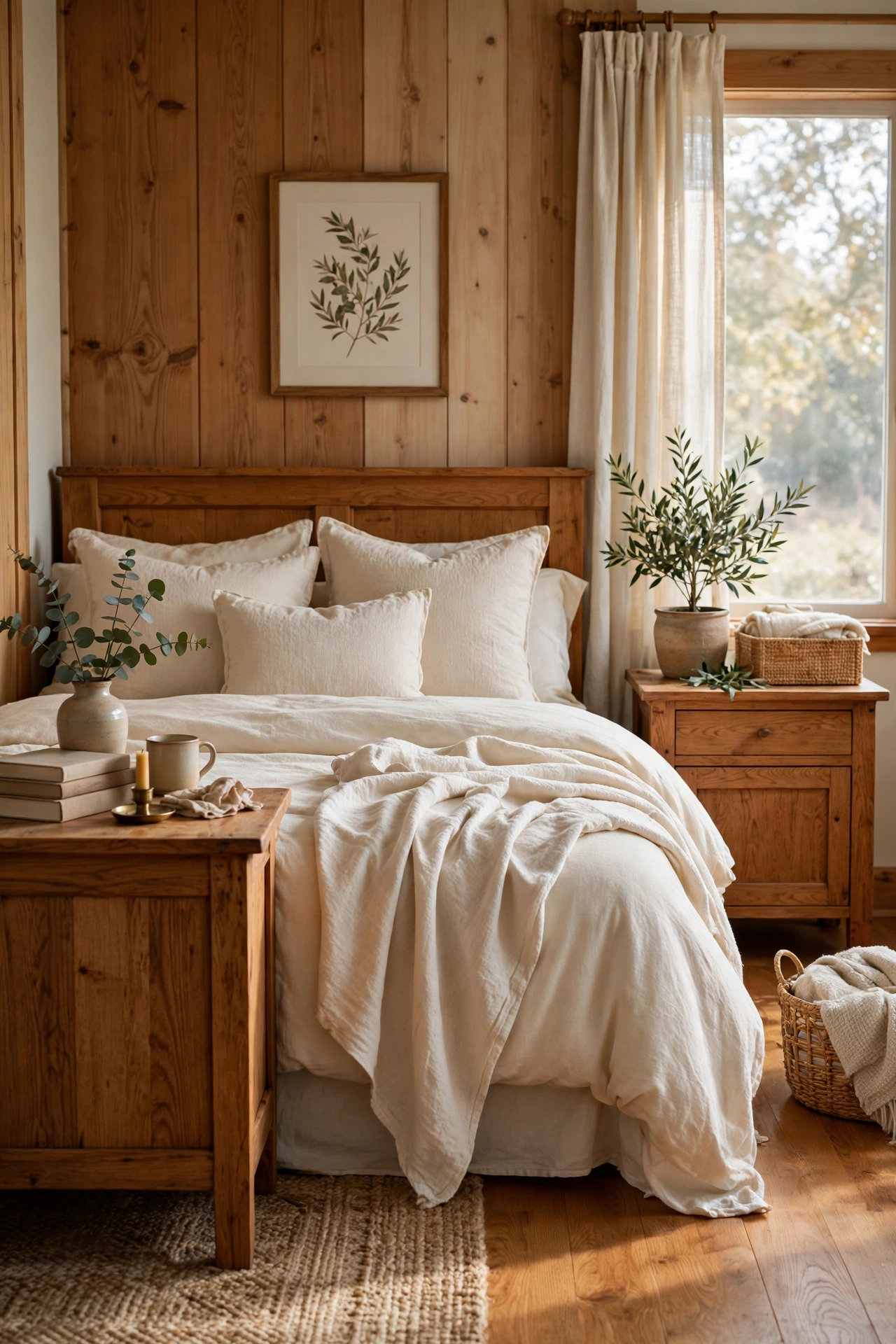
Cold, grey floors make a bedroom feel unfinished. Warm wood — honey oak, walnut or a pale ash — on the floor or in the furniture warms the whole room, even when the walls stay pale. If you cannot change the floor, a large rug in a warm tone and wooden nightstands do much of the same job. Palette: honey oak, cream, warm white. Textures: wood, wool, linen. Budget first step: wooden nightstands and a warm-toned rug over a cold floor.
12. Style the Nightstand Like a Still Life — and Keep It Clear
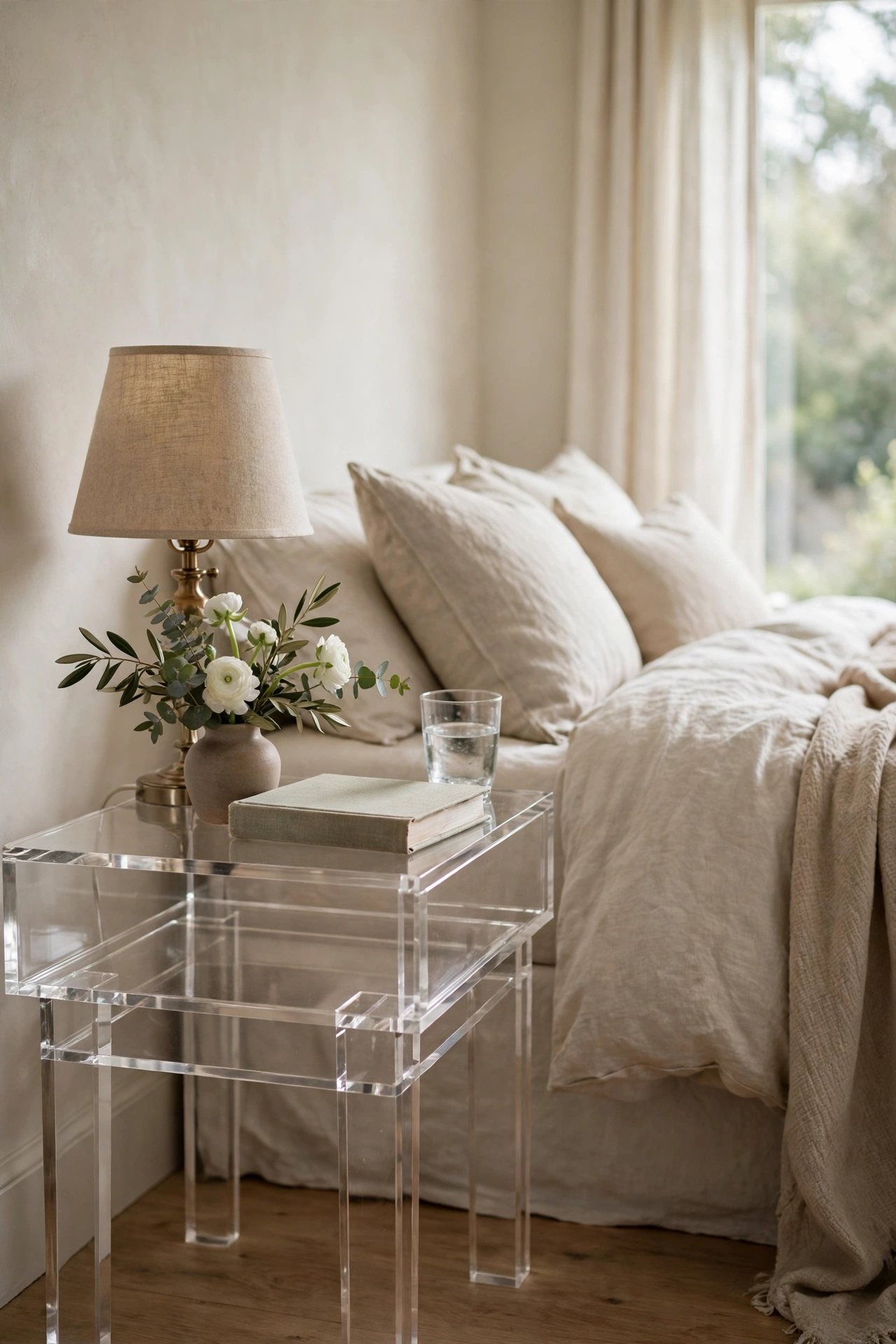
A nightstand should hold a lamp, a book and a glass of water — and not much else. One small object, a framed photo or a tiny vase, is enough. Clear the chargers, clutter and spare clothes into a drawer, because a clear nightstand is what makes a bedroom feel quiet at night. Palette: wood, white, one accent colour. Textures: ceramic, paper, linen. Budget first step: clear both nightstands tonight, then add back one lamp and one object each.
13. Try a Moody Dark Wall Behind the Bed
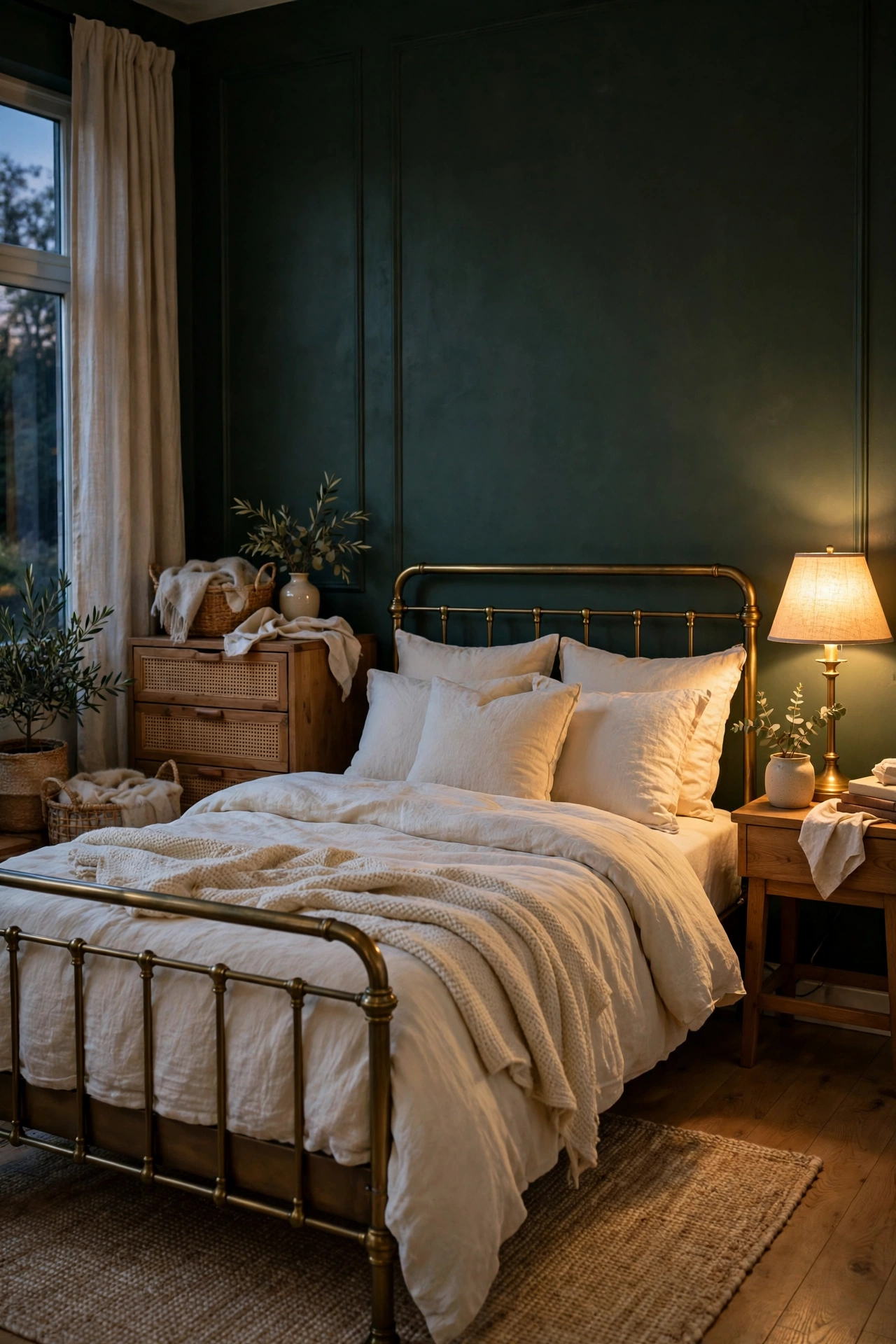
Deep navy, forest green, charcoal or aubergine on the wall behind the bed makes a bedroom feel cocooning at night, especially in a large or very bright room. Keep the bedding pale so the dark wall does not swallow the bed, and add warm light and one warm metal, usually brass, for contrast. Palette: forest green + cream, navy + oak, charcoal + brass. Textures: matte paint, velvet, brass. Budget first step: paint one wall deep green and switch to warm, dimmable bulbs.
14. Layer Throws and Cushions in Odd Numbers
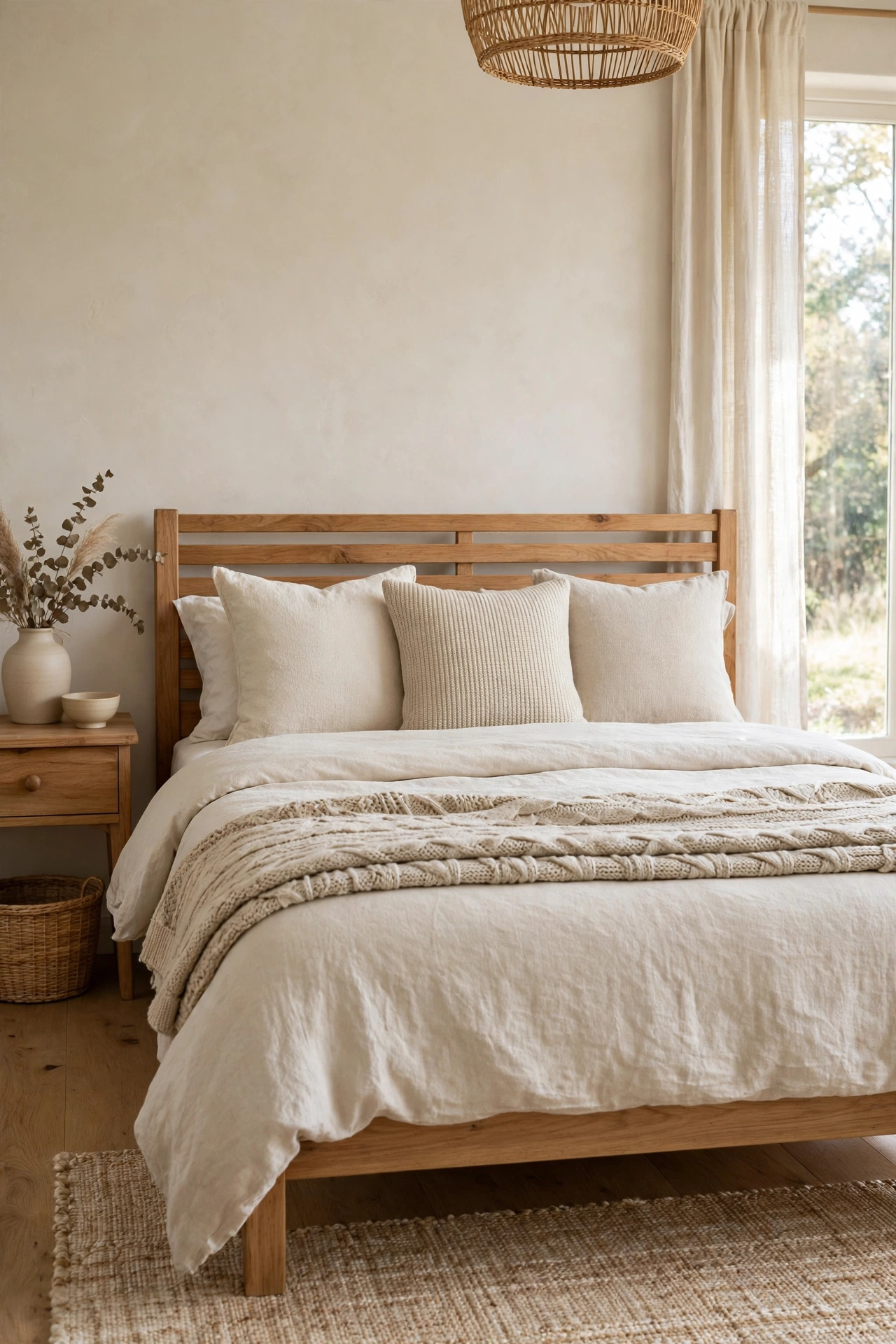
Three cushions, not four, and one throw folded across the foot of the bed, not two. Odd numbers look gathered rather than arranged. Mix sizes — two large squares behind, one smaller lumbar in front — and mix textures, not colours: a knit, a linen and a velvet in the same palette. Palette: cream, oatmeal, one muted accent. Textures: knit, linen, velvet. Budget first step: one knitted throw and two cushions in the room’s existing colours.
15. Bring in Rattan, Cane and Woven Texture
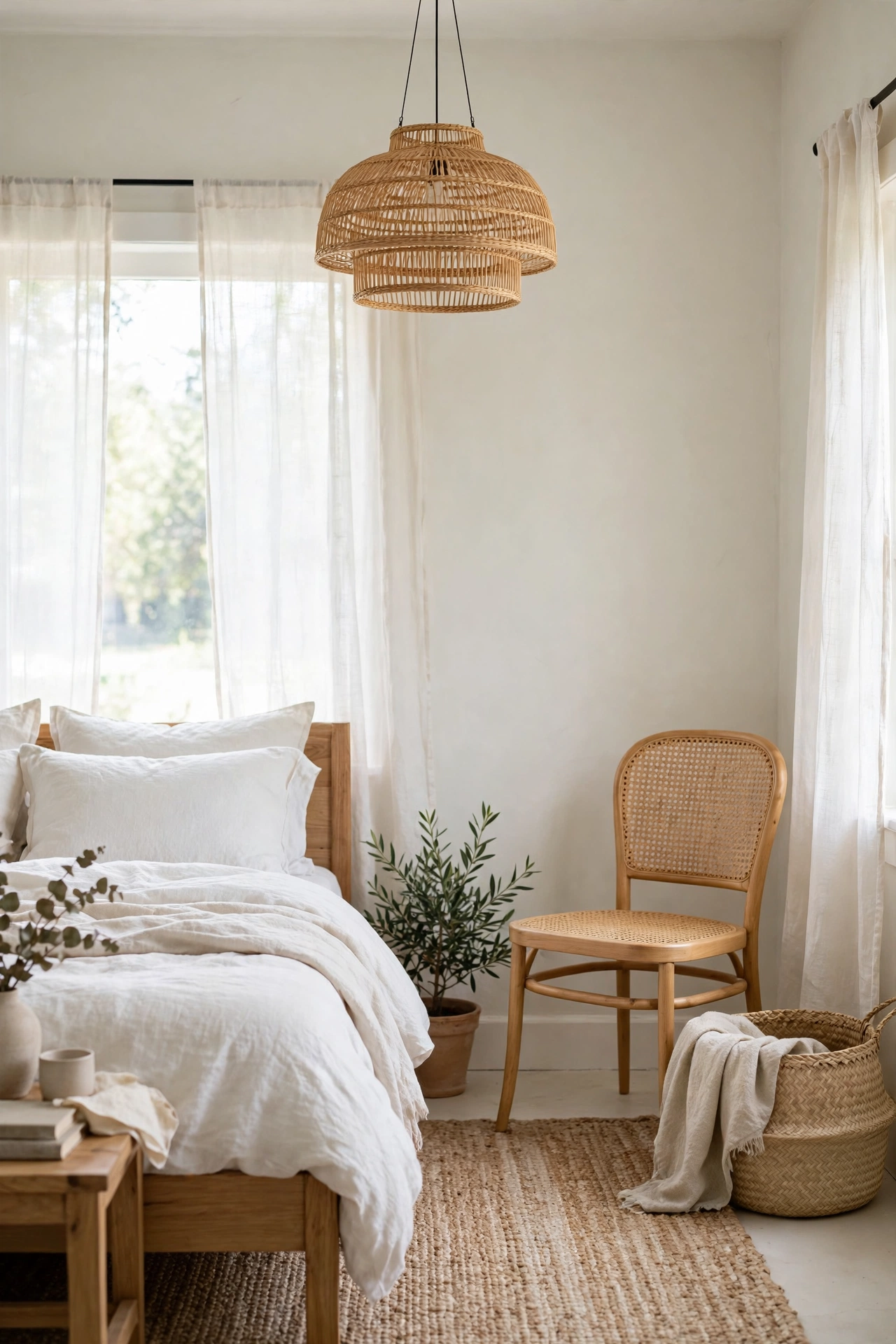
Woven texture stops a pale bedroom feeling flat. A rattan pendant, a cane chair, a seagrass basket or a jute rug adds warmth and a handmade feel, and natural fibres hide dust and wear far better than smooth surfaces. Use at least three woven pieces at different scales — large underfoot, medium in seating or lighting, small on the bed or shelf. Palette: natural rattan, cream, warm wood. Textures: rattan, jute, linen. Budget first step: a seagrass basket and a woven tray on the dresser.
16. Make Storage Invisible
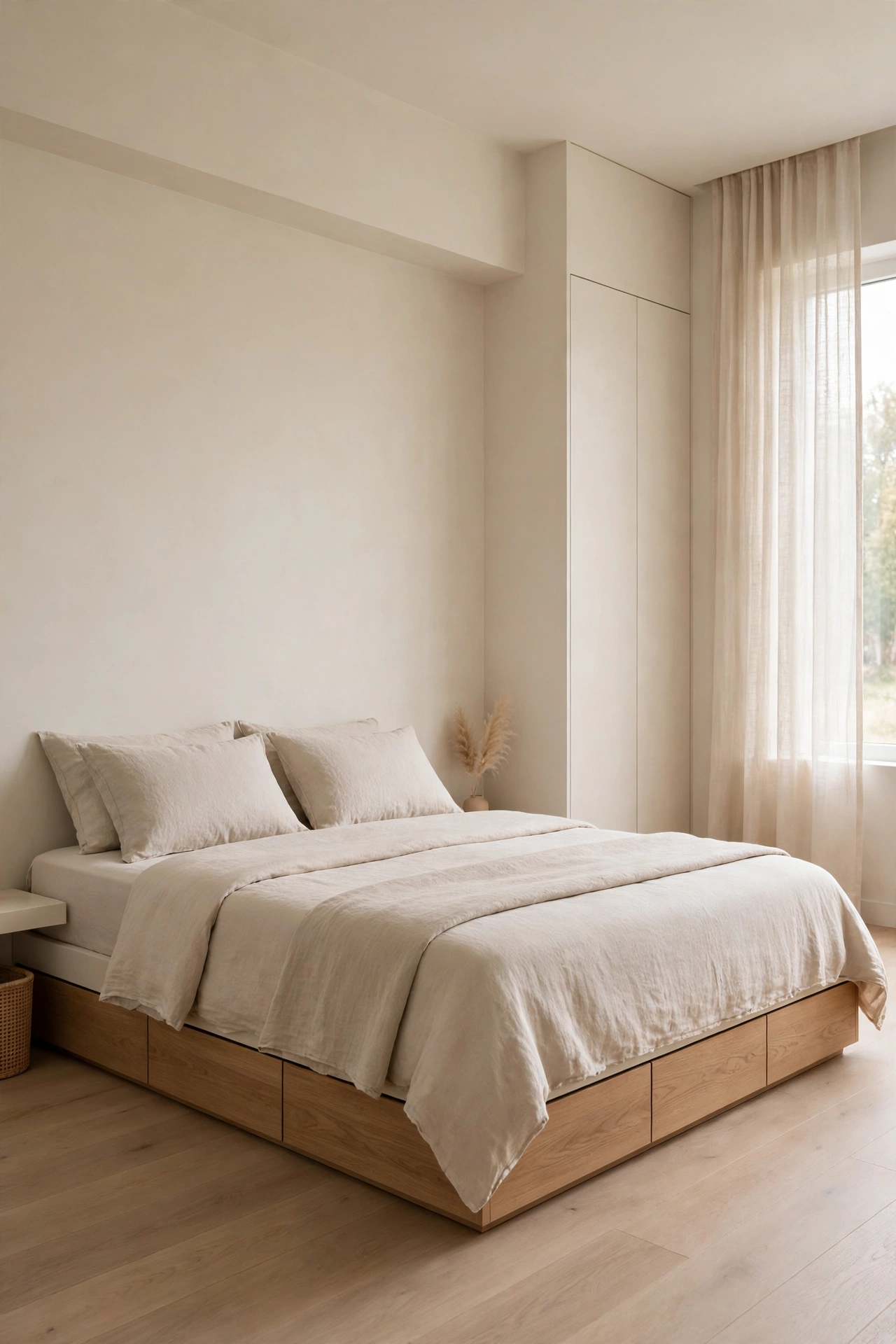
Clutter is the enemy of cozy. A bed with drawers, a tall narrow wardrobe, shelves above the bed and hooks behind the door all hide the everyday mess without a new room. Keep open shelves to two or three objects each — a book, a plant, a framed print — and put the rest behind closed doors. Palette: same as the room, so storage blends in. Textures: painted wood, linen baskets, wood. Budget first step: under-bed storage boxes and a basket for the chair that collects clothes.
17. Hang One Large Piece of Art, Not Many Small Ones
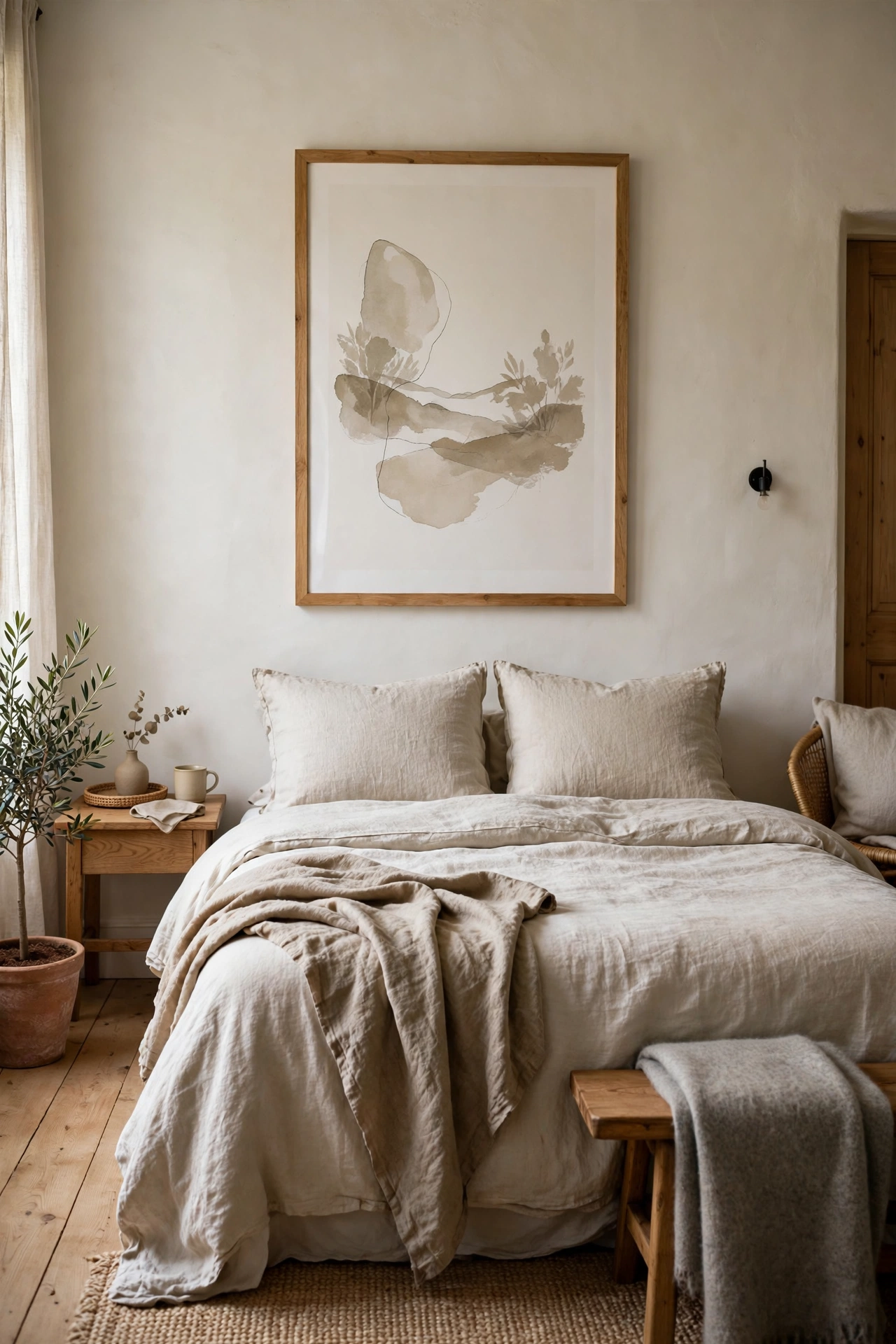
One large framed print, photograph or textile above the bed, or a mirror opposite the window, gives a bedroom a focal point and makes the wall feel finished. A scatter of small frames reads as unfinished and makes the room feel busy. Choose art you actually like, in colours already in the room. Palette: art colours drawn from bedding and rug. Textures: framed paper, linen, wood frame. Budget first step: one large print in a simple wooden frame, hung at eye level above the bed.
18. Add a Touch of Vintage
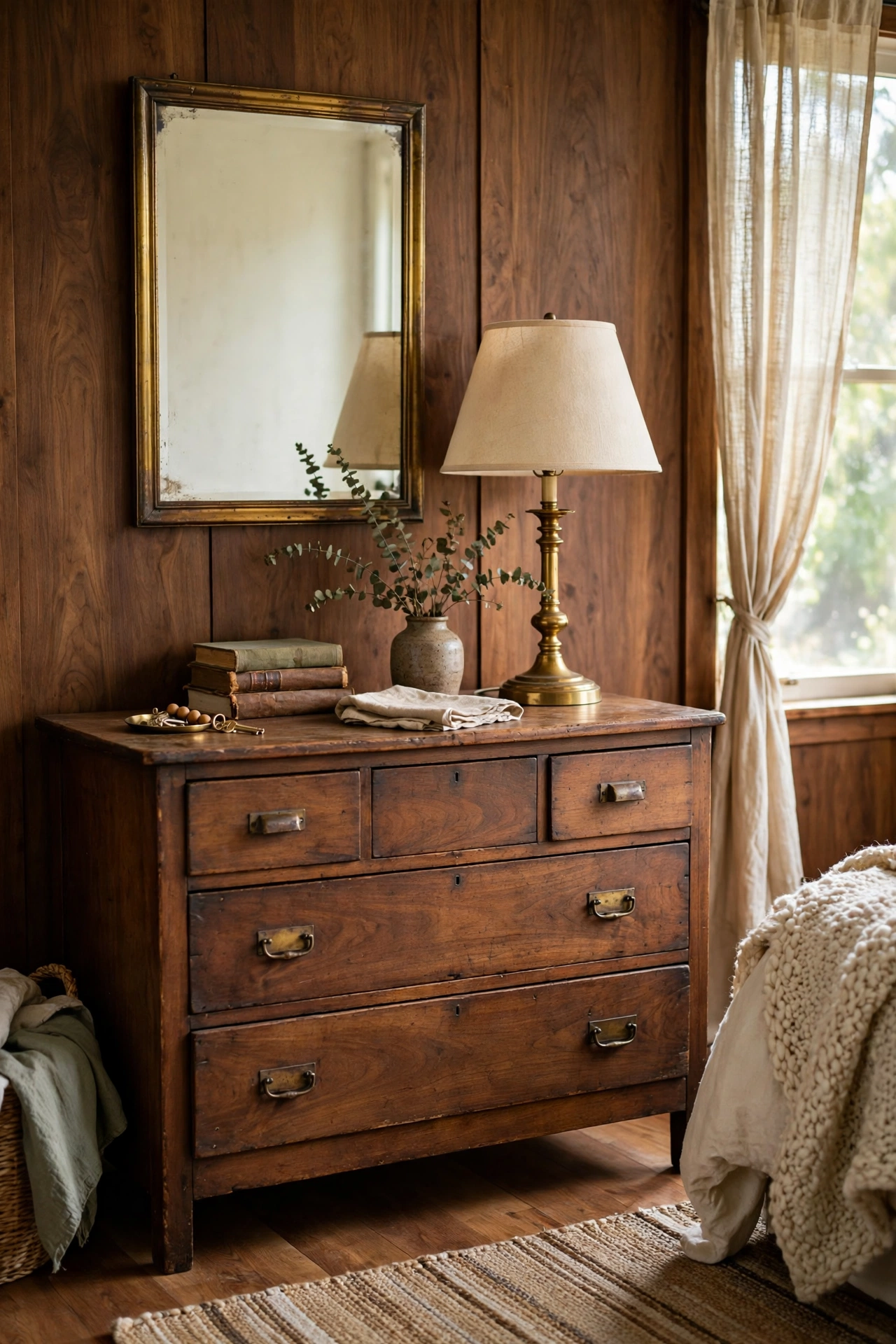
One vintage piece — a wooden dresser, a brass lamp, a patterned rug, a framed mirror — gives a bedroom a story that new furniture cannot. It does not need to match perfectly; in fact, one piece that does not match is what makes the room feel collected rather than bought in a day. Palette: warm walnut, brass, cream. Textures: aged wood, brass, wool. Budget first step: one solid second-hand wooden piece, cleaned and oiled, in place of a flat-pack one.
19. Keep the Palette to Three Colours
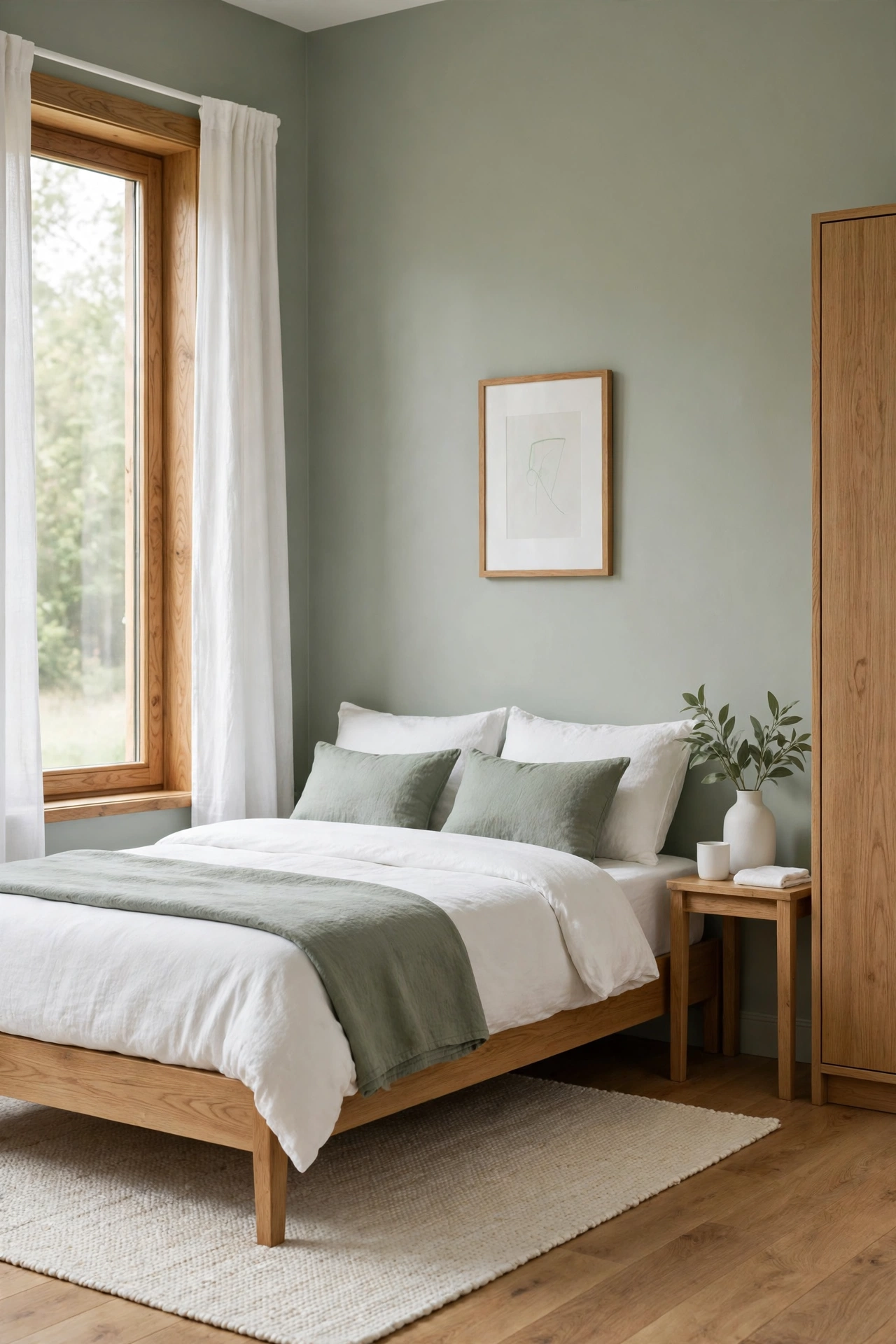
The calmest bedrooms use three colours: one main neutral, one warm wood or texture, and one accent. White + oak + sage. Cream + walnut + dusty blue. Stone + wood + terracotta. Everything else — cushions, art, throws — stays inside those three, so the room feels pulled together even when it is full. Palette: pick your three and write them down before you shop. Textures: vary texture, not colour. Budget first step: remove one colour from the room this weekend and see how much calmer it feels.
20. Finish with Scent, Sound and Softness
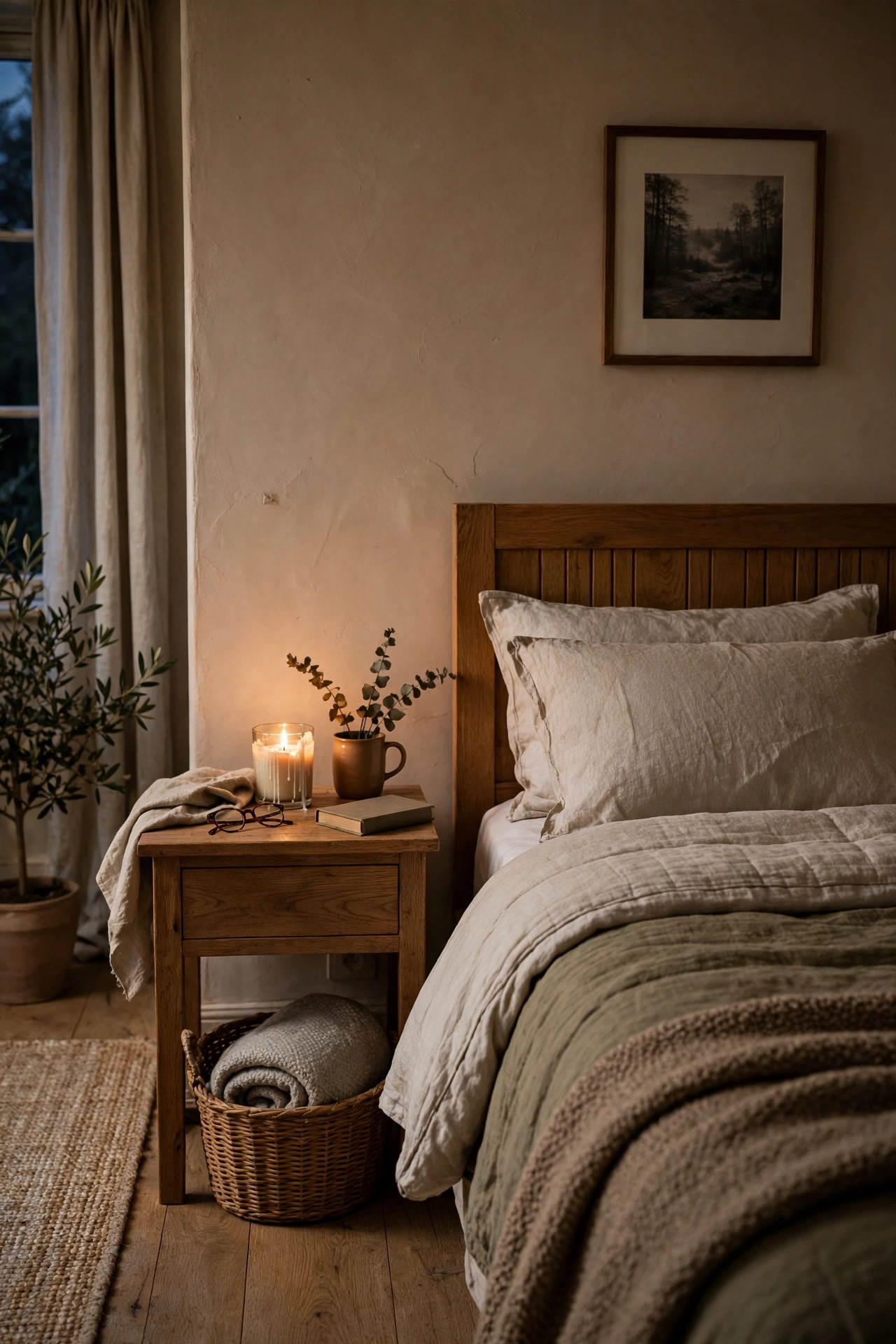
Cozy is not only visual. A clean, warm scent — linen spray, a candle, fresh air from an open window — a soft rug underfoot, and a room that is quiet at night finish the feeling. Keep the bed made, the surfaces clear and the light low in the evening, and the room will do the rest. Palette: warm, soft, natural. Textures: clean cotton, wool, wood. Budget first step: make the bed properly every morning, open the window for ten minutes, and light a candle in the evening.
How to Choose Your Starting Point
If your room is small or low on light, start with ideas 1, 5 and 7 — pale bedding, a rug and a low wooden bed make the space feel bigger. If it is large and very bright, start with idea 13, a moody wall, and idea 4, warm low light. If you are renting or on a tight budget, start with ideas 6, 14 and 19 — textiles and a three-colour palette need no painting or building work. If the room is fine but tired, start with idea 20 and idea 1 — a properly made bed and a clear, quiet evening routine transform a room in a weekend.
Before-You-Start Checklist
Photograph your bedroom in daylight and list what must stay — bed, wardrobe, flooring. Choose your three colours from something you already own and love. Fix sleep basics first: a supportive mattress, the right pillows, curtains that truly block light. Fix lighting second: two warm bedside lights on dimmers. Fix bedding third: it covers the largest surface in the room. Only then buy colour and furniture. Remove one thing from the room before you add anything new.
Conclusion
A warm and inviting bedroom is not about a style name or a shopping list. It is about light at the right height, bedding that feels good, wood and wool under your hands, and a room that holds less than every other room in your home. Take things out until the room feels quiet, then add back only what helps you rest. Start with one idea from this list — the one that matches the hours you will actually spend in the room — build that one properly, and the cozy will take care of itself. — Olive, Kind Interiors