10 Best Bedroom Ideas That Turn Your Bedroom Into a Calm Retreat
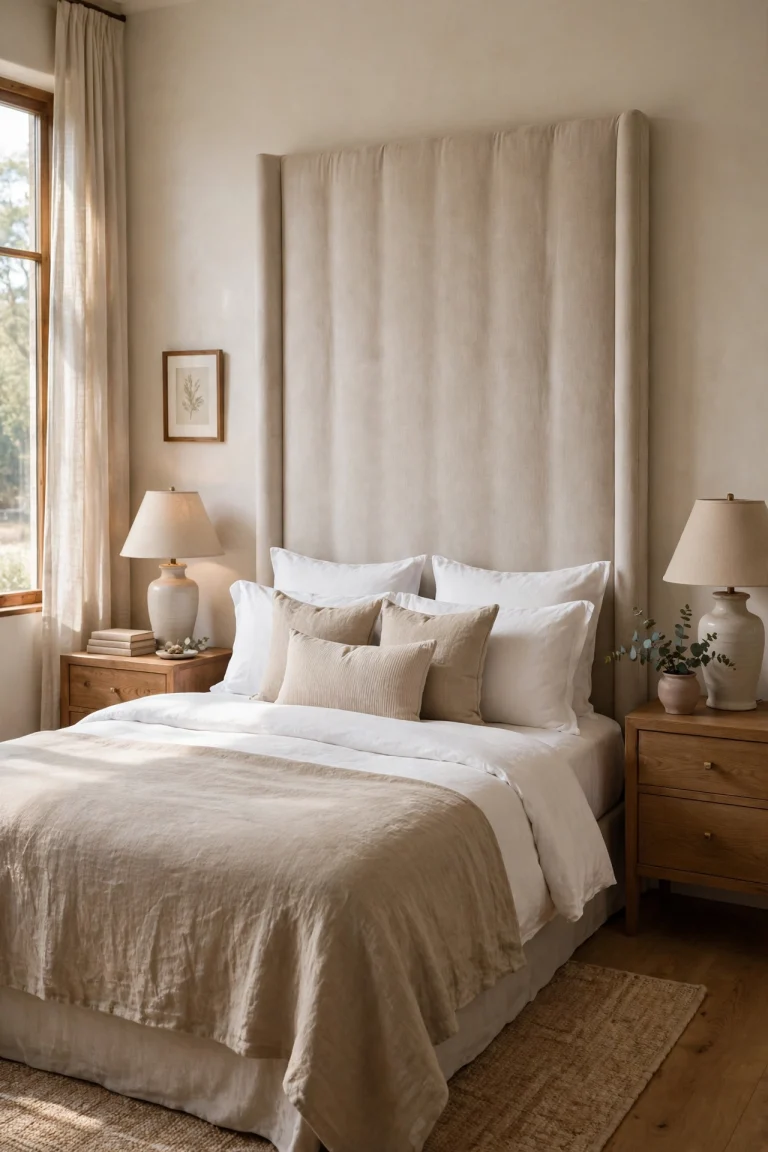
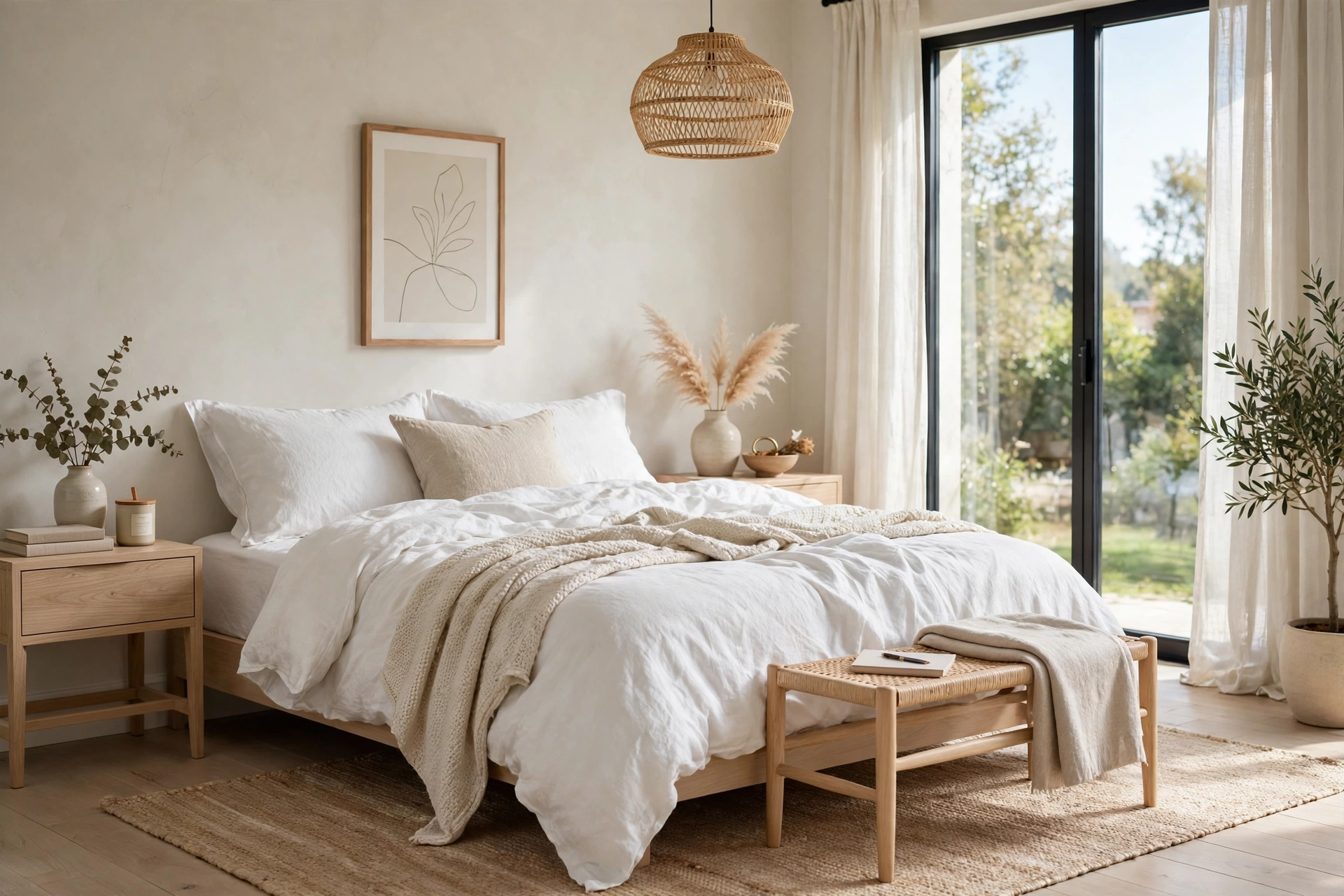
A calm bedroom is built on light, layers and clear surfaces — the three threads running through all ten ideas.
Your bedroom does two jobs that pull in opposite directions. It has to switch you off at night — dark, quiet, uncluttered — and switch you on in the morning, with light and order. Most disappointing bedrooms fail at one of the two, usually because they were decorated as an afterthought, with leftover furniture and whatever bedding was on offer.
The good news is that bedrooms respond to small, well-chosen changes better than any other room. You do not need an extension or a designer. You need one clear idea, bedding that feels good, lighting you can dim, and somewhere for everything to go. The ten ideas that follow each give you exactly that: a look, the moves that create it, and the cheapest first step.
1. Serene Scandinavian Minimalism
Pale wood, white walls and very little on show — that restraint is the whole point. Scandinavian bedrooms feel calm because every object has to earn its place, and daylight is treated as the main decoration.
Start with white or warm off-white walls and light wood — oak, ash or pine — for the bed frame and floor. Keep bedding in white, oatmeal and soft grey, then add warmth with one wool throw and one textured cushion. Hide clutter in closed storage. Open shelves in this style quickly look messy, so use them for two or three objects only.
Best for: Small, north-facing or low-light rooms. Try this first: Clear surfaces and swap in pale bedding. Budget: Low to medium.
2. Warm Modern Farmhouse
Modern farmhouse takes the comfort of a country bedroom — linen, weathered wood, a bed you sink into — and strips away the fuss. A tight palette of white, cream and natural wood keeps it fresh rather than twee.
Use shiplap, tongue-and-groove or simple panelling on one wall only, usually behind the bed. Layer washed linen, a chunky knit throw and a woven or jute rug for texture instead of pattern. Choose black metal details — a bed frame, lamp or handles — to sharpen all that softness.
Best for: Families and anyone who wants cosy without clutter. Try this first: Add a jute rug and washed-linen bedding. Budget: Medium.
3. Japandi Calm
Japandi blends Japanese restraint with Scandinavian warmth: low furniture, natural materials and generous empty space. It is the most restful style in this list, and also the most disciplined — nothing decorative survives unless it is also useful or beautiful up close.
Pick a low platform bed in light wood and keep the bedside low too — a small stool or floor-level table works. Limit the palette to beige, stone, clay and wood, and let texture — linen, rattan, paper lamps — carry the interest. Leave one wall completely bare. The empty space is part of the design, not a gap waiting to be filled.
Best for: Stressed sleepers and minimalists. Try this first: Swap to a paper pendant light and remove one item a day for a week. Budget: Medium.
4. Coastal Retreat
A coastal bedroom should feel like the first morning of a holiday: breezy, bright and unhurried. The trick is to suggest the sea with colour and texture — blue, sand, driftwood, linen — rather than filling shelves with shells and anchors.
Build the palette from white and sand, then add blue in layers: palest on walls, deepest in one cushion or throw. Choose natural, airy fabrics — linen curtains that move, a cotton coverlet, a woven rug underfoot. Keep furniture light in colour and leggy, so the room feels open and the floor stays visible.
Best for: Bright, sunny rooms and holiday homes. Try this first: Hang sheer linen curtains and add one deep-blue accent. Budget: Low.
5. Moody Boutique-Hotel Drama
Dark walls do the opposite of what most people fear: in a bedroom they make the room feel smaller in a good way — cocooning, intimate and made for evenings. This is the boutique-hotel look, built on deep colour, soft lighting and one or two luxurious materials.
Paint walls in deep navy, forest green, charcoal or aubergine, and take the colour over skirting and doors for a seamless wrap. Layer lighting at low level — two bedside lamps, a dimmer, warm bulbs — and avoid a single bright ceiling light. Add one luxe texture, such as a velvet headboard or throw, and one metal, usually brushed brass, for contrast.
Best for: Large or very bright rooms; anyone who sleeps better in the dark. Try this first: Paint one wall deep green and switch to warm, dimmable bulbs. Budget: Medium.
6. Boho Layers and Texture
Boho is the most forgiving style here: it is collected, not bought in one go. Pattern, plants, travel finds and handmade textiles layer up over time, so it suits renters and small budgets — and it never needs to match perfectly.
Anchor the bed with one large textile — a macrame hanging, woven tapestry or patterned throw in warm earth tones. Mix patterns at different scales: a large rug pattern, a medium bedding print and small-scale cushions. Fill corners with plants and baskets. Rattan, wicker and jute repeat through the room and tie mismatched pieces together.
Best for: Renters, collectors and small budgets. Try this first: Add a woven wall hanging and two trailing plants. Budget: Low.
7. Mid-Century Modern Revival
Mid-century pieces were designed for smaller post-war homes, which is why they still work so well now: low, leggy, useful furniture in warm walnut, with clean lines and no wasted bulk. One good vintage or vintage-style set can furnish a whole room coherently.
Choose walnut or teak tones for the bed, nightstands and dresser, all raised on tapered legs so the floor shows through. Add colour in controlled doses — mustard, rust, olive or teal — in cushions, art or a single chair. Finish with period lighting: a sculptural pendant, cone sconces or a tripod lamp, plus simple abstract art.
Best for: Small to medium rooms; fans of vintage furniture. Try this first: Swap one piece for a tapered-leg walnut nightstand. Budget: Medium to high.
8. Small Space, Big Function
In a small bedroom the layout is the design. Every piece must store something, fit the wall it sits on, or do two jobs — and a light palette with mirrors does the rest. Done well, a small room feels deliberate rather than compromised.
Measure first, then choose storage furniture: a bed with drawers, a tall narrow wardrobe, shelves that use the wall above the bed. Use one palette throughout — ideally pale and warm — and repeat it on walls, bedding and storage so nothing visually chops up the room. Fold, hang or wheel away what you can: a fold-down desk, wall-mounted lamps and hooks instead of a chair for clothes.
Best for: Studio flats, box rooms and guest rooms. Try this first: Add under-bed drawers and wall-mounted bedside lights. Budget: Low to medium.
9. Biophilic Green Bedroom
Biophilic design simply means building a room around nature: plants, daylight, wood, stone and earthy colour. A green bedroom feels alive in a way no other colour quite matches — but the plants have to suit the light you actually have, or the look fades fast.
Start with colour: sage or olive on walls or bedding gives the leafy feeling even before you add a single plant. Match plants to light honestly — pothos and snake plants for low light, fiddle-leaf fig and monstera only for bright rooms. Group plants at three heights — hanging, on furniture and on the floor — and repeat natural materials in the rug, headboard and baskets.
Best for: Plant lovers and rooms with good daylight. Try this first: Add three easy plants at three different heights. Budget: Low.
10. Soft Luxury: The Hotel-at-Home Bed
You do not need to redecorate to get this one — you need to make a bed properly. Hotels rely on symmetry, a tall headboard and layers of crisp white bedding, and the effect reads as luxury even in an ordinary room. It is the fastest transformation in this list.
Invest in the headboard first: tall, upholstered and wider than the pillows. It is the backdrop for everything else. Dress the bed in white or ivory layers — fitted sheet, duvet folded back, a coverlet or throw across the foot, sleeping pillows plus two larger squares behind. Keep the two sides of the bed identical: matching nightstands, matching lamps, one small object each. Symmetry is what the eye reads as ‘hotel’.
Best for: Anyone wanting a big change with no building work. Try this first: Buy the best white bedding set you can afford and add a throw. Budget: Medium.
Choosing well — Pick one idea, then spend in the right order
The most common bedroom mistake is mixing three half-ideas at once: a farmhouse bed, coastal cushions and a moody wall that fights both. Choose the single idea above that matches your room, borrow at most one element from another, and let everything else support it.
If your room is small or low on light, start with 1. Scandinavian, or 8. Small Space — pale colours, leggy furniture and closed storage make the space feel bigger. If it is large and very bright, start with 5. Moody Boutique-Hotel — deep colour absorbs excess light and turns size into intimacy. If it is rented, or on a tight budget, start with 6. Boho, or 4. Coastal — both are built from textiles, plants and second-hand finds, with no painting or building work needed. If it is full of plants and daylight, start with 9. Biophilic Green — it organises what you already love around sage colour and natural materials. If it is fine, just tired, start with 10. Hotel-at-Home Bed — a headboard and properly layered white bedding transform a room in a weekend.
Spend in this order: 1. Sleep basics first. A supportive mattress, the right pillows, and curtains that truly block light. No style survives bad sleep. 2. Lighting second. Two warm bedside lights on dimmers change a room more per pound or dollar than any furniture swap. 3. Bedding third. It covers the largest surface in the room — one good natural-fibre set beats three cheap ones. 4. Colour and furniture last. Buy both only once the first three are settled.
The one-weekend plan: Remove everything that is not for sleep, rest or getting dressed. Clear both nightstands down to lamp, book and water. Make the bed properly: folded-back layer, throw across the foot. Replace bright white bulbs with warm ones, and add a dimmer or a second low lamp. Make one change from your chosen idea — the “try this first” step. Sleep in it for a week before buying anything else — then fix what still bothers you.
The rule underneath all ten ideas: a bedroom should hold less than every other room in your home. Take things out until the room feels quiet, then add back only what helps you rest.
Budgets: Low = textiles, plants and paint; Medium = plus bedding or a headboard; High = plus furniture.