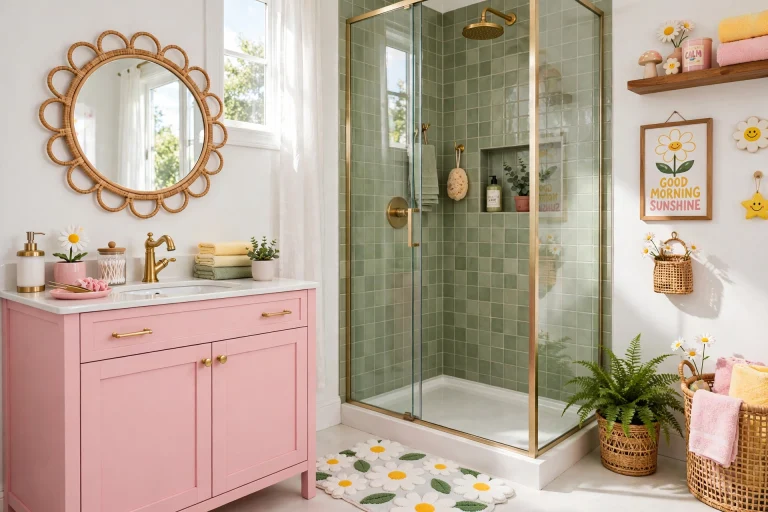
13 Best Green Bathroom Ideas That Feel Fresh And Stylish
Green is the colour bathrooms were made for. It is calm like a spa, fresh like a garden, and far more forgiving than all-white. From a single sage vanity to a full forest-green wet room, these 13 ideas show every level of commitment — with the exact steps to copy each one.
How to choose your green — before you buy anything
The shade that looks perfect on a phone screen can turn cold, dark or yellow on your wall. Three things decide it: the light in the room, the size of the surface, and the finish you put next to it.
Test in the real light: paint a large swatch — at least A3 — on two different walls and live with it for a full day. North-facing rooms cool every green down, so choose a warmer, yellower green there. South-facing rooms can handle blue-based forest and emerald.
Match depth to surface size: deep green on four walls needs good light or a small room where drama is the point. In a large, dim bathroom, use deep green on one zone — the shower, the vanity wall — and keep the rest pale.
Always add a warm partner: green stays fresh when something warm sits beside it: brushed brass, mid-tone wood, warm white, rattan or jute. Green plus chrome plus bright white is the combination most likely to feel cold and clinical.
Pick the finish for the job: use bathroom-rated, moisture-resistant paint on walls. Choose glossy tile where you want light bounce, matte tile where you want calm. Keep grout in the same colour family as the tile for a seamless look.
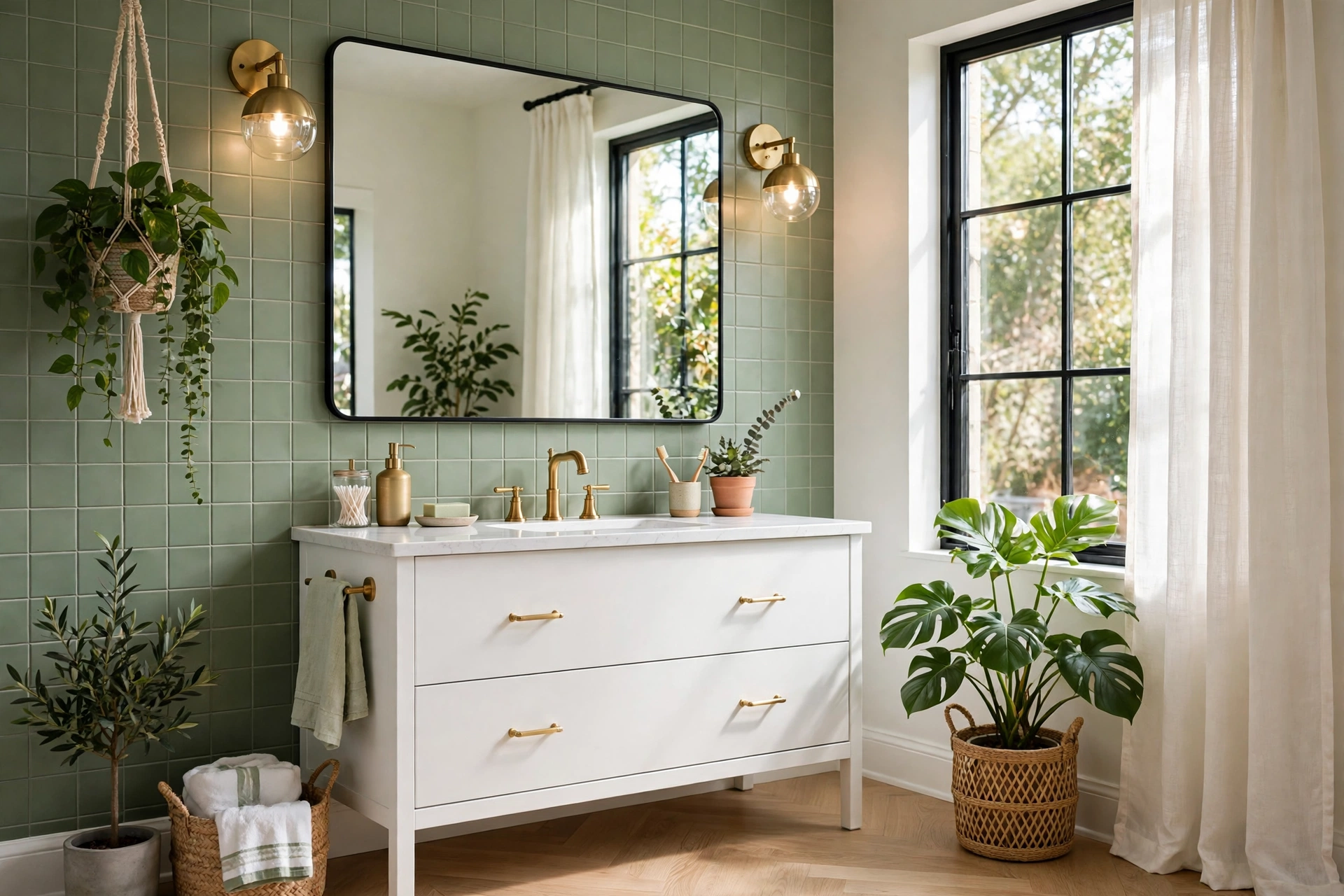
1. Sage Walls With Warm Brass
Why it works: Sage is the easiest green to live with. It is soft enough for a main bathroom, interesting enough to replace grey or white, and it flatters skin tones in mirror light — which is why it suits a vanity wall so well.
How to copy it: Paint walls and vanity in the same sage family, then add one warm metal — brushed brass or antique gold — for taps, mirror frame and sconces. Keep the counter and sanitaryware white so the green stays airy.
Best for: Family bathrooms and low-light rooms that need calm, not drama.
2. A Forest-Green Tile Wet Room
Why it works: Concentrating deep green inside the shower gives you the moody, boutique-hotel feeling without darkening the whole room. Glass keeps the colour visible, and the contrast makes white towels and pale floors look crisper.
How to copy it: Run dark green subway or metro tiles floor-to-ceiling inside the enclosure only. Use a light grout if you want the tile pattern to read, or a matching dark grout for a seamless, cocooning wall.
Best for: En-suites and wet rooms where the shower is the largest surface.
3. An Emerald Vanity as the Hero Piece
Why it works: If tiling feels like too big a commitment, paint — or buy — one strong piece. An emerald vanity against deeper green panelling creates a layered, expensive look from a single item of furniture.
How to copy it: Choose a vanity with cup pulls or knobs you can swap to brass. Add a large round mirror to soften all the straight lines, a white vessel or undermount basin for contrast, and one small vase of greenery on the counter.
Best for: Renters and quick refreshes — one piece, one weekend, big change.
4. Glossy Vertical Green Tile
Why it works: Laying rectangular tiles vertically draws the eye up and makes a standard ceiling feel taller. A glossy glaze also bounces light around, so a saturated emerald reads jewel-like rather than flat.
How to copy it: Stack tiles vertically in the shower or behind the basin. Pair with pale marble or stone on the counter and floor so the wall stays the star, and repeat the tile colour in nothing else except perhaps a towel.
Best for: Low ceilings and narrow bathrooms that need height.
5. The Botanical Spa Layer
Why it works: Plants are not an extra in a green bathroom — they are the bridge between paint colour and real nature. Trailing pothos, ferns and a large leafy plant in a woven basket make deep green walls feel intentional and alive.
How to copy it: Start with three plants at three heights: one trailing from a shelf, one on the floor in a basket, one small on the vanity. Choose humidity-loving varieties and keep pots in natural textures — rattan, terracotta, stone.
Best for: Bathrooms with a window and anyone chasing a spa feeling on a budget.
6. Full Colour in a Small Jade Bathroom
Why it works: Small does not have to mean pale. Matching mint and jade across walls, vanity and floor tiles wraps a compact room in one colour, which actually makes it feel larger because there are fewer visual breaks.
How to copy it: Commit to one green family and repeat it. Use hexagonal or small-format floor tiles for grip and pattern, a round mirror to break up the grid, and gold details to add warmth at eye level.
Best for: Cloakrooms, en-suites and small family bathrooms.
7. Green Marble for a Statement Finish
Why it works: Green marble does the work of colour, pattern and luxury material in one move. Its white and gold veining means you need very little else — a plain white bath and simple fittings are enough.
How to copy it: Use marble — or a good marble-effect porcelain — on one wall or the bath surround first. Keep grout lines minimal, fittings simple, and accessories white so the veining stays the pattern.
Best for: Main bathrooms and anyone renovating for long-term value.
8. Floral Wallpaper on a Green Ground
Why it works: A powder room is the safest place to go bold. Large-scale florals on a deep green ground feel joyful and grown-up at once, and because guests spend minutes — not mornings — there, the pattern never overwhelms.
How to copy it: Paper the walls above a tiled or panelled lower half. Pick out one colour from the print — pink, cream or gold — for towels and accessories, and use a round mirror so the pattern reflects back on itself.
Best for: Guest cloakrooms and downstairs loos that need personality.
9. Zone the Colour: Green Shower Only
Why it works: Zoning is the designer trick behind many of the most-pinned bathrooms. Keep the rest of the room warm white or pale stone, then saturate just the shower. You get the photograph — and the feeling — without repainting everything when tastes change.
How to copy it: Tile the shower interior and its return wall in green. Continue the bathroom floor into the shower for a seamless line, and add a recessed niche so bottles do not break up the colour block.
Best for: Open-plan en-suites and cautious first-timers.
10. Classic Sage With Panelled Walls
Why it works: Panelling plus sage is the timeless option. The moulding adds shadow and architecture to plain walls, while a lighter vanity in front of a deeper green wall gives you tone-on-tone depth without any tile at all.
How to copy it: Add simple wall panelling or picture-frame moulding, paint it a shade deeper than the vanity, and light it with two globe sconces either side of the mirror. Marble-effect flooring keeps it classic.
Best for: Period homes and paint-only makeovers.
11. Bright Green Tile That Wakes Up the Room
Why it works: Not every green bathroom needs to be serene. Bright, saturated tile in mixed greens is playful, retro and brilliant for a family bathroom that should feel fun in the morning — especially around a simple white basin.
How to copy it: Balance the energy: a white basin and counter, brass taps for warmth, and plain towels. Mix two or three bright greens in the tile itself for depth, and keep everything else simple so the room still feels clean.
Best for: Family bathrooms and retro or cottage-style homes.
12. Dark Green Balanced With Warm Wood
Why it works: Green can feel cold on its own — wood fixes that instantly. A timber vanity or shelf warms dark green tile, adds grain against all that smooth ceramic, and connects the bathroom to the rest of a home decorated in natural materials.
How to copy it: Pair dark green walls with mid-tone wood, not orange pine or grey wash. Add a woven or jute runner and wooden bath bridge to repeat the warmth at floor level.
Best for: North-facing bathrooms that get cool, blue daylight.
13. The Olive Botanical Bath Moment
Why it works: This is the full picture from the cover, taken one step further: olive tiles, a bath placed by the light, plants on every sill, and natural textures underfoot. It works because nothing is shiny or stark — every surface is matte, woven or leafy.
How to copy it: Place the bath where the light is, even if it means turning the layout. Use olive or moss tiles, a stone or wood counter, and layer plants at the window rather than buying more accessories.
Best for: Bathrooms with a freestanding bath and good natural light.
Copy-the-look checklist: Sample the green on two walls for 24 hours. Decide the zone: one wall, one piece, or the whole room. Fix the warm partner — brass or wood — before ordering fittings. Order tile with 10 percent extra for cuts and spares. Choose grout colour with the tile, not after. Add lighting at mirror height, not just ceiling spots. Layer three plants at three heights. Repeat the green once more in a towel or print. Keep bottles and clutter in baskets or a niche. Photograph the room — if the green reads grey, warm it up.
Three mistakes to avoid: using a blue-based green in a cold north-facing room; mixing two warm metals (brass and chrome) in one small space; and tiling in deep green with no warm white or wood to balance it. Each one makes the room feel colder than the colour on the tin promised.
Green rewards a little bravery. Start with the idea closest to the room you already have, copy its pairing — not just its colour — and your bathroom will feel fresh and stylish every single morning.